![Comics Now: Issue 21 [2024]](http://librairie.coreenne.fr/cdn/shop/files/2cbbfd16a45749872005ec15c7c4206d.jpg?v=1765326519&width=3840)

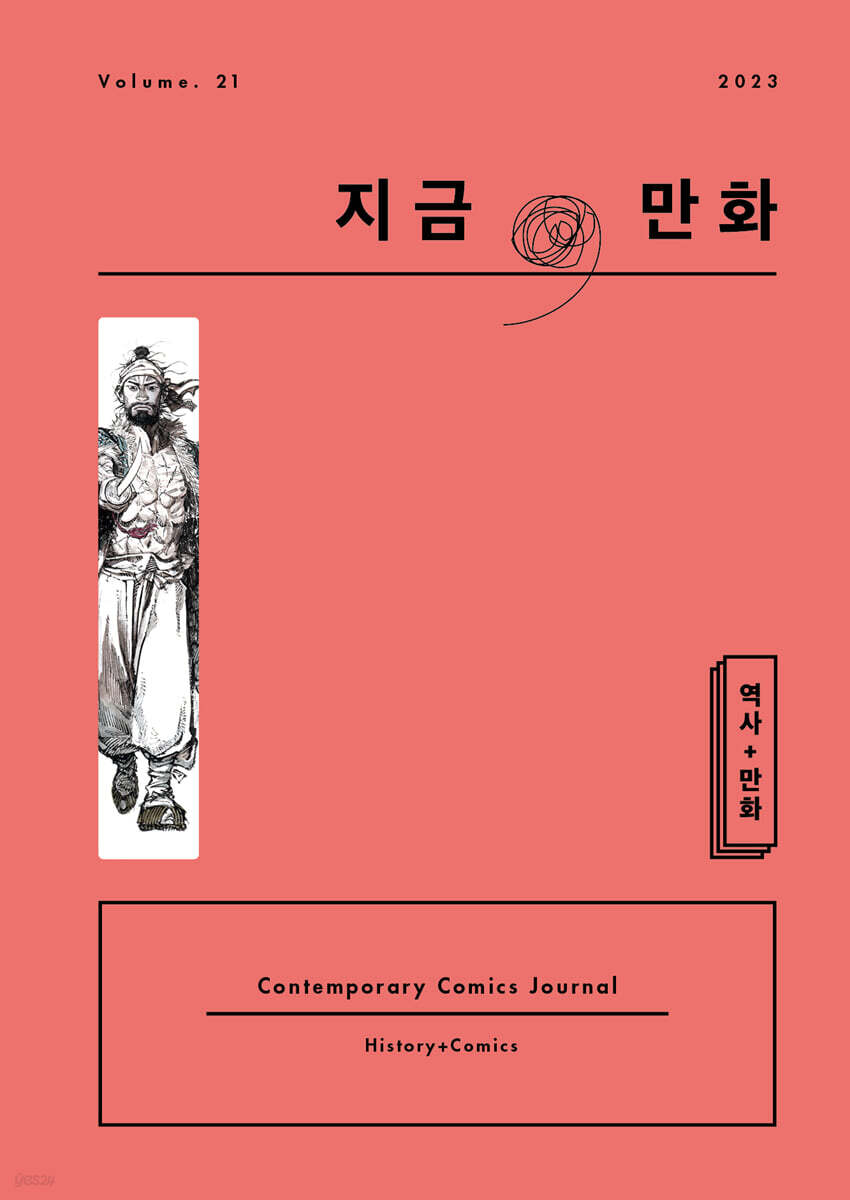
Now, Comics: Issue 21 [2024]
 |
Description
Book Introduction
Unraveling 'History + Comics' through Comic Criticism!
The only critical journal that explores the intersection of history and comics through comic criticism!
* How should a comic based on history be created?
* What is the difference between historical fiction and alternative history comics?
* What kind of historical learning cartoons are there that follow “Faraway Neighbors”?
* If I graduate from the cartoon department now, will I be able to debut and get a job?
* Korean webtoons are booming, but why is the webtoon industry in a slump?
《Now, Comics》 has established itself as Korea's only comics criticism magazine since its first issue in 2018.
Not only academics and researchers in the webtoon and cartoon department, but also webtoon platform and agency workers, related industry workers, aspiring artists, and students are welcoming the cartoon critique magazine, “Now, Cartoon.”
As there are virtually no media outlets that delve into the hottest issues happening in the Korean comics and webtoons world, provide sharp critiques of related works, and even provide vivid interviews, the number of people who want to read comics and webtoons through "Now, Comics" is steadily increasing.
Issue 21 of "Now, Comics" (2023) explores historical comics, a genre of story comics that reconstruct historical facts and events.
Additionally, we will examine how we attempted to kill two birds with one stone: learning about history and enjoying the comics through historical learning comics and historical education comics.
Generally, when creating a fictional work based on history, there are two ways to do it: to make historical facts and events relatively faithful to chronological order, and to reconstruct them at the creator's discretion.
In our country, historical comics are mostly educational comics for learning history, and the latter, which uses fictional compositions to create creativity, is usually used in novels and story comics.
The comics of the 1950s and 1960s were the beginning of genre comics.
Story comics, which had expanded after the Korean War in the 1950s, expanded their distribution network to comic book stores in the 1960s, and the number of comic readers increased as commercial Japanese comics gained popularity.
To cater to the tastes of such readers, various genre comics emerged, and comics based on historical events and figures, such as Kim Yong-hwan's "Rabbit and Monkey," Kim Jong-rae's "Three Thousand Miles in Search of Mother," and Park Ki-dang's "Eagle of the Sea," gained popularity.
In the 1970s, the harsh censorship of cartoons left cartoonists, publishers, and readers all feeling intimidated.
So, adult comics published in sports newspapers were loved for their relatively free expression.
Among them were Go Woo-young's "Romance of the Three Kingdoms" and "Water Margin", and Bang Hak-gi's "Damo, the Female Detective of Joseon".
The 1980s and 1990s were a time of turbulent social change.
Many historical comics from this period reflected the aspirations of the time, the national spirit of resistance, and expectations for the future.
Lee Du-ho's "Deungdeokung" and "Im Kkeokjeong", and Baek Seong-min's "Jang Gil-san" and "Let's Make a Box" were loved.
In the women's comics world, comics like Kim Hye-rin's "Star of the North Sea" also garnered much attention.
After the 2000s, works containing sharp messages that permeate modern history began to appear, starting with Yoon Tae-ho's "Yahoo," which was based on the Sampoong Department Store collapse incident.
There are Jeong Yong-yeon's "Jeongga's Sosa," Kim Eun-seong's "My Mother's Story," Park Geon-ung's "Nogunri Story," and Kim Geum-suk's "Waiting."
Comics that reconstructed authentic historical books and records using traditional methods also gained popularity.
Representative examples include Park Si-baek's "Park Si-baek's Annals of the Joseon Dynasty" and "Park Si-baek's History of Goryeo."
《Now, Comics》 No. 21 analyzed the meaning of historical comics and webtoons, seeking out the backgrounds and works that could comfort those wounded by distorted or forgotten history, and exploring history and humanity within them.
The only critical journal that explores the intersection of history and comics through comic criticism!
* How should a comic based on history be created?
* What is the difference between historical fiction and alternative history comics?
* What kind of historical learning cartoons are there that follow “Faraway Neighbors”?
* If I graduate from the cartoon department now, will I be able to debut and get a job?
* Korean webtoons are booming, but why is the webtoon industry in a slump?
《Now, Comics》 has established itself as Korea's only comics criticism magazine since its first issue in 2018.
Not only academics and researchers in the webtoon and cartoon department, but also webtoon platform and agency workers, related industry workers, aspiring artists, and students are welcoming the cartoon critique magazine, “Now, Cartoon.”
As there are virtually no media outlets that delve into the hottest issues happening in the Korean comics and webtoons world, provide sharp critiques of related works, and even provide vivid interviews, the number of people who want to read comics and webtoons through "Now, Comics" is steadily increasing.
Issue 21 of "Now, Comics" (2023) explores historical comics, a genre of story comics that reconstruct historical facts and events.
Additionally, we will examine how we attempted to kill two birds with one stone: learning about history and enjoying the comics through historical learning comics and historical education comics.
Generally, when creating a fictional work based on history, there are two ways to do it: to make historical facts and events relatively faithful to chronological order, and to reconstruct them at the creator's discretion.
In our country, historical comics are mostly educational comics for learning history, and the latter, which uses fictional compositions to create creativity, is usually used in novels and story comics.
The comics of the 1950s and 1960s were the beginning of genre comics.
Story comics, which had expanded after the Korean War in the 1950s, expanded their distribution network to comic book stores in the 1960s, and the number of comic readers increased as commercial Japanese comics gained popularity.
To cater to the tastes of such readers, various genre comics emerged, and comics based on historical events and figures, such as Kim Yong-hwan's "Rabbit and Monkey," Kim Jong-rae's "Three Thousand Miles in Search of Mother," and Park Ki-dang's "Eagle of the Sea," gained popularity.
In the 1970s, the harsh censorship of cartoons left cartoonists, publishers, and readers all feeling intimidated.
So, adult comics published in sports newspapers were loved for their relatively free expression.
Among them were Go Woo-young's "Romance of the Three Kingdoms" and "Water Margin", and Bang Hak-gi's "Damo, the Female Detective of Joseon".
The 1980s and 1990s were a time of turbulent social change.
Many historical comics from this period reflected the aspirations of the time, the national spirit of resistance, and expectations for the future.
Lee Du-ho's "Deungdeokung" and "Im Kkeokjeong", and Baek Seong-min's "Jang Gil-san" and "Let's Make a Box" were loved.
In the women's comics world, comics like Kim Hye-rin's "Star of the North Sea" also garnered much attention.
After the 2000s, works containing sharp messages that permeate modern history began to appear, starting with Yoon Tae-ho's "Yahoo," which was based on the Sampoong Department Store collapse incident.
There are Jeong Yong-yeon's "Jeongga's Sosa," Kim Eun-seong's "My Mother's Story," Park Geon-ung's "Nogunri Story," and Kim Geum-suk's "Waiting."
Comics that reconstructed authentic historical books and records using traditional methods also gained popularity.
Representative examples include Park Si-baek's "Park Si-baek's Annals of the Joseon Dynasty" and "Park Si-baek's History of Goryeo."
《Now, Comics》 No. 21 analyzed the meaning of historical comics and webtoons, seeking out the backgrounds and works that could comfort those wounded by distorted or forgotten history, and exploring history and humanity within them.
index
■ Cover Story
▷ What is a historical comic?
Lee Moon-young (history writer, editor-in-chief of Paran Media)
▷ Finding the center around the periphery
A look at the changes of a new era through historical cartoons
: Kang Jeong-hwa (Professor of Korean Language Education at Korea University, comic critic)
▷ Dilemma for an 'interesting conversation between the past and present'
The Benefits and Limitations of History Education Comics
Son Sang-min (Director of the Korea Cartoonists Association)
▷ How did historical comics develop in Korean publishing?
The flow and current status of historical comics from the 1960s to the 2000s
: Kim Jong-ok (comic researcher)
■ Interview
▷ Depicting the harsh lives of heroes and the common people with a bold brush
:Knife Wielding cartoonist Go Il-kwon
■ Critic
▷ Stories of women hidden in myths
Cassandra and Lower Olympus
Baek Eun-ji (Professor of Webtoon Contents at Seowon University, comic story writer, comic critic)
▷ Two ways to understand Joseon history through comics
Park Si-baek's Annals of the Joseon Dynasty and Joseon Dynasty Annals
Baek Geon-woo (comic critic)
▷ Modern society as seen through knowledge comics
Read "A History of the Left in Comics" and "Fascism vs. Antifa"
: Kim Tae-kwon (cartoonist, author of “Kim Tae-kwon’s Crusade Story”)
■ Interview
▷ Cultivating K-content experts through digital creation-focused education.
Current Status and Prospects of Korean Cartoon Studies Education
: Seong Moon-ki, Professor of Cartoon and Animation at Cheongju University and President of the Korean Cartoon and Webtoon Society
■ Issue
▷ Is there a blueprint for college graduates in the comics and webtoon industry to pursue their careers?
Focusing on the college comics and webtoon job fair
Park Hye-ri (Professor, Department of Webtoon Animation, Dongyang University)
▷ Is a cold wind of restructuring blowing in the webtoon industry?
Rapidly declining revenue from works and the polarization of platforms
: Kang Tae-jin (comic critic)
■ Interview
▷ Developing the talents needed by the industry through webtoon education closely related to the field.
: Park In-ha, Chairman of Seoul Webtoon Academy
■ Essay
▷ If you love, be like them
Sanho's "And the Witch Went into the Forest" and Mokumokuren's "The Summer When Hikaru Died"
Park So-hae (mystery novelist, host of 'Park So-hae's Genre Salon')
▷ The number of comics, the place of number
Lee Yeon-suk (Rita) (visual culture critic)
▷ Dedicated to BICOF's 〈Singing BICOF Creative Music Festival〉
Park Eun-seok (pop music critic)
■ This kind of comic for this kind of time: A good comic if I were your assistant
▷ The Best Horned Conch, Your Life Assistant
Kim In-jeong's "The Best Horned Conch"
: Choi Jeong-yeon (comic critic)
▷ Andante in the Hand, a Warm Comfort for Life
Na Yoon-hee's "Andante in the Hand"
: Choi Gi-hyeon (comic critic)
▷ On the way to Sanae, a blade of grass
Moon Seong-pil's "Judge Lee Han-young"
Lee Seong-ho (comic critic)
▷ Come to Uiyang-ri, where good-faith, equivalent exchanges take place.
Go Ara's "Run Errands for Me"
: Yoon Ji-hye (comic critic)
▷ A retro webtoon that brings back memories of those days, "Nature Man"
Lee Yun-chang's "Nature Man"
: Kim Ha-rim (comic critic)
■ Famous scenes and lines from comics
▷ The essence of humanity projected through fantasy
Kanehito Yamada and Tsukasa Abe's "Funeral Freeren"
Kang Sang-jun (popular culture columnist)
▷ The Chronicle of a Man's Journey from 'Immortal' to 'Mortal'
Mayonnaise's "Corpse Knight Gunther"
Kim Min-tae (comic critic)
▷ It is better for the victim to die
Shohei Manabe's "Kujou's Deadly Sins"
Kim Jae-hoon (comic critic)
■ Comics vs. Drama
▷ A special store that unlocks memories
The comic "Purgatory" vs. the drama "Ssangappocha"
: Kim Jin-cheol (children's author, comic critic, author of "Nangi and Tani's Time Travel" and "Pocket of Nagging")
■ Webtoon vs. Webtoon
▷ Responsibility and Survival: The Choices Made by "Man in Luv" and "Misaeng"
Webtoon "Man in Luv" vs. Webtoon "Misaeng"
: Suchami (comic critic)
■ Now, comic books
▷ Well-expressed misfortune
In one case, Lee Dong-yong
Moon Jong-pil (comic critic)
■ Corner Graphic Novel
▷ To you who are at the crossroads of achievement and satisfaction
Léa Muravieck's "Grand Vid"
: Kim Deuk-won (comic critic)
■ Critics' picks!
▷ How to Use Familiarity Cleverly
Yoon Hong's "One Step to the Demon King"
Choi Yun-seok (comic critic)
■ Comic News Inside
■ New Release Report
▷ What is a historical comic?
Lee Moon-young (history writer, editor-in-chief of Paran Media)
▷ Finding the center around the periphery
A look at the changes of a new era through historical cartoons
: Kang Jeong-hwa (Professor of Korean Language Education at Korea University, comic critic)
▷ Dilemma for an 'interesting conversation between the past and present'
The Benefits and Limitations of History Education Comics
Son Sang-min (Director of the Korea Cartoonists Association)
▷ How did historical comics develop in Korean publishing?
The flow and current status of historical comics from the 1960s to the 2000s
: Kim Jong-ok (comic researcher)
■ Interview
▷ Depicting the harsh lives of heroes and the common people with a bold brush
:Knife Wielding cartoonist Go Il-kwon
■ Critic
▷ Stories of women hidden in myths
Cassandra and Lower Olympus
Baek Eun-ji (Professor of Webtoon Contents at Seowon University, comic story writer, comic critic)
▷ Two ways to understand Joseon history through comics
Park Si-baek's Annals of the Joseon Dynasty and Joseon Dynasty Annals
Baek Geon-woo (comic critic)
▷ Modern society as seen through knowledge comics
Read "A History of the Left in Comics" and "Fascism vs. Antifa"
: Kim Tae-kwon (cartoonist, author of “Kim Tae-kwon’s Crusade Story”)
■ Interview
▷ Cultivating K-content experts through digital creation-focused education.
Current Status and Prospects of Korean Cartoon Studies Education
: Seong Moon-ki, Professor of Cartoon and Animation at Cheongju University and President of the Korean Cartoon and Webtoon Society
■ Issue
▷ Is there a blueprint for college graduates in the comics and webtoon industry to pursue their careers?
Focusing on the college comics and webtoon job fair
Park Hye-ri (Professor, Department of Webtoon Animation, Dongyang University)
▷ Is a cold wind of restructuring blowing in the webtoon industry?
Rapidly declining revenue from works and the polarization of platforms
: Kang Tae-jin (comic critic)
■ Interview
▷ Developing the talents needed by the industry through webtoon education closely related to the field.
: Park In-ha, Chairman of Seoul Webtoon Academy
■ Essay
▷ If you love, be like them
Sanho's "And the Witch Went into the Forest" and Mokumokuren's "The Summer When Hikaru Died"
Park So-hae (mystery novelist, host of 'Park So-hae's Genre Salon')
▷ The number of comics, the place of number
Lee Yeon-suk (Rita) (visual culture critic)
▷ Dedicated to BICOF's 〈Singing BICOF Creative Music Festival〉
Park Eun-seok (pop music critic)
■ This kind of comic for this kind of time: A good comic if I were your assistant
▷ The Best Horned Conch, Your Life Assistant
Kim In-jeong's "The Best Horned Conch"
: Choi Jeong-yeon (comic critic)
▷ Andante in the Hand, a Warm Comfort for Life
Na Yoon-hee's "Andante in the Hand"
: Choi Gi-hyeon (comic critic)
▷ On the way to Sanae, a blade of grass
Moon Seong-pil's "Judge Lee Han-young"
Lee Seong-ho (comic critic)
▷ Come to Uiyang-ri, where good-faith, equivalent exchanges take place.
Go Ara's "Run Errands for Me"
: Yoon Ji-hye (comic critic)
▷ A retro webtoon that brings back memories of those days, "Nature Man"
Lee Yun-chang's "Nature Man"
: Kim Ha-rim (comic critic)
■ Famous scenes and lines from comics
▷ The essence of humanity projected through fantasy
Kanehito Yamada and Tsukasa Abe's "Funeral Freeren"
Kang Sang-jun (popular culture columnist)
▷ The Chronicle of a Man's Journey from 'Immortal' to 'Mortal'
Mayonnaise's "Corpse Knight Gunther"
Kim Min-tae (comic critic)
▷ It is better for the victim to die
Shohei Manabe's "Kujou's Deadly Sins"
Kim Jae-hoon (comic critic)
■ Comics vs. Drama
▷ A special store that unlocks memories
The comic "Purgatory" vs. the drama "Ssangappocha"
: Kim Jin-cheol (children's author, comic critic, author of "Nangi and Tani's Time Travel" and "Pocket of Nagging")
■ Webtoon vs. Webtoon
▷ Responsibility and Survival: The Choices Made by "Man in Luv" and "Misaeng"
Webtoon "Man in Luv" vs. Webtoon "Misaeng"
: Suchami (comic critic)
■ Now, comic books
▷ Well-expressed misfortune
In one case, Lee Dong-yong
Moon Jong-pil (comic critic)
■ Corner Graphic Novel
▷ To you who are at the crossroads of achievement and satisfaction
Léa Muravieck's "Grand Vid"
: Kim Deuk-won (comic critic)
■ Critics' picks!
▷ How to Use Familiarity Cleverly
Yoon Hong's "One Step to the Demon King"
Choi Yun-seok (comic critic)
■ Comic News Inside
■ New Release Report
Detailed image

Publisher's Review
In this age of war and terrorism, what should be captured in historical comics?
Walter Scott, known as the father of historical novels, said that historical novels can encourage exploration of historical figures and eras.
In other words, historical novels and other creative works based on historical material make readers reflect on time and humanity.
Our country's historical comics have also shown a similar pattern.
In the 1950s and 1960s, as distribution networks expanded due to so-called Japanese comics and comic book stores, various genres of comics were introduced, and comics featuring heroes from the Joseon Dynasty and other historical periods gained popularity.
After that, in order to avoid the strict censorship of comics, the adult comics market allowed relatively free expression, and the works of outstanding artists such as Go Woo-young and Bang Hak-gi were loved.
And in the 1990s, as the country went through social upheaval, works such as “Im Kkeok-jeong,” “Im Kkeok-jeong,” “Jang Gil-san,” and “Gaksi-tal” appeared, which reflected the pain of the times and the resistance of the common people.
In women's comics, works such as Kim Hye-rin's "Star of the North Sea" and "Thermidor" were also greatly loved by young people at the time.
In the 2000s, comics based on major true stories and incidents that occurred in our society appeared.
Representative works include Kim Hyung-bae's "Yellow Bullet," which depicts the suffering of humans amid the horrors of the Korean War; Heo Yeong-man's "Oh! Han River," which depicts the turbulent history of Korea through the story of one family; and Yoon Tae-ho's "Yahoo," which is based on the Sampoong Department Store collapse.
Non-fiction comics that appeared later, such as Park Geon-woong's "Nogunri Story" and "Time of the Beast," Kim Geum-suk's "Grass" and "Waiting," and Kim Eun-seong's "My Mother's Story," made us look back on the unresolved conflicts and problems in Korean history.
As South Korea's geopolitical position and status in the world change, dealing with its related history in the form of comics holds various meanings.
Rather than simply listing historical facts and events in chronological order and accepting them at the level of information, it serves to comfort those who have suffered incurable wounds in a distorted and forgotten time through various filters such as the composition of the story and characters, and the author's message.
In that sense, historical comics should ultimately be recognized as a genre that explores living humans through the past and present.
Where did our era come from and where is it going, as seen in historical comics and webtoons?
How can we properly enjoy historical learning comics and knowledge-based comics?
What are some historical educational comics that follow "Faraway Neighbors"?
The cover story of the 21st issue of the webtoon critique magazine "Now, Cartoon" explores what Korean historical cartoons are and their evolution over time.
In addition, we analyzed the temporal characteristics depicted in historical comics and webtoons, and what historical educational comics, such as “Faraway Neighbors,” are like, and what their strengths and limitations are.
In 'Critic', we compared and analyzed the myth-based works "Cassandra" and "Lore Olympus", and looked into the similarities and differences between "Park Si-baek's Joseon Dynasty Annals" and "Joseon Dynasty Siltalk" by Mujeok Pink, which deal with the "Joseon Dynasty Annals."
It also contains foreign knowledge comics depicting modern society introduced by cartoonist Tae-Kwon Kim of “Tae-Kwon Kim’s Crusade Story.”
In 'Interview', we met with cartoonist Ko Il-kwon of 'Knife Wielding' and talked about the secrets of serializing historical webtoons for a long time.
We also heard about the current state of Korean cartoon education and its future prospects from Seong Moon-ki, president of the Korean Cartoon and Webtoon Society, and Park In-ha, director of the Seoul Webtoon Academy.
In 'This Kind of Comics for This Time', we meet a curation of comics recommended by celebrities under the theme of 'A good comic if I were to be your assistant', and introduce various comics/webtoons through 'Famous Lines/Scenes from Life in Comics', 'Webtoon vs. Drama', and 'Webtoon vs. Webtoon'.
Additionally, in the 'Critics' Picks!' corner, comic critics provide in-depth critiques of works selected by them.
《Now, Comics》No. 21 = History + Comics
● How should we create comics based on history?
Historical comics have garnered attention in Korea in a variety of ways. Representative examples include historical comics like "A Distant Neighbor," historically-inspired comics featuring fictional characters like Ikeda Riyoko's "The Rose of Versailles" and Ko Il-kwon's "The Sword," and alternative history comics like Park So-hee's "The Palace."
By reproducing historical events through the author's unique interpretation, readers can be presented with a new perspective on the era and the lives of its people.
As Lukacs said, by faithfully carrying out the principle that “historical novels are artistic representations of historical events and the people who participated in them,” we can convey comfort and new emotions to readers.
● What kind of historical learning cartoons are there that follow “Faraway Neighbors”?
Lee Won-bok's "Faraway Neighbors," which teaches history through comics, was very popular when it was published.
This is because, breaking away from the traditional historical learning that simply presents information in chronological order, the story, structured in the form of a comic book and structured in the form of cause and effect, provides a comfortable yet new kind of enjoyment, as if listening to an interesting story.
After that, history teachers and experts worked with publishers to produce various history educational comics.
Also, the “Romance of the Three Kingdoms” drawn by famous cartoonists such as Lee Hee-jae and Lee Hyeon-se also gained popularity.
Among them, Park Si-baek's "Park Si-baek's Annals of the Joseon Dynasty" and "Park Si-baek's History of Goryeo" became bestsellers loved by readers for covering Korea's authentic history but written with a comic-like fun and structure.
● If I graduate from the cartoon department now, will I be able to debut and get a job?
With the boom in webtoons, many students are entering universities with the dream of becoming professionals in the industry, as new majors related to comics and webtoons are being established.
Webtoons have enjoyed immense popularity thanks to the rise of online content, starting with the COVID-19 pandemic, and the industry's boom has led to the establishment of comics and webtoon departments at universities.
Due to the decline in the school-age population, the number of new students admitted to local universities has dropped significantly, but the popularity of webtoons has led to a boom in the establishment of related majors.
The number of departments with a major related to comics and webtoons was around 25 as of 2018, but this number has increased dramatically to 63 by 2023.
Domestic cartoon and webtoon education developed from an apprenticeship-style education to a complex educational method in which cartoon departments were established in universities in the late 1990s and creative education was provided under the guidance of professors.
Currently, the comics and webtoon education being conducted at universities is focused on nurturing students as professional talents, and is being developed to cultivate diverse knowledge in various fields.
However, university education has the disadvantage of being difficult to learn about the on-site atmosphere of the cartoon and webtoon industry and of having poor practical skills.
To address this, many universities are striving to build close ties with industry, focusing on education linked to the field.
Additionally, the university provides students majoring in comics and webtoons with opportunities to gain hands-on experience in the field through MOUs with industry, expert lectures, and job fairs.
Additionally, online and offline classes held by professional organizations or related groups other than universities will be helpful to students who dream of becoming webtoon artists or related professionals.
Walter Scott, known as the father of historical novels, said that historical novels can encourage exploration of historical figures and eras.
In other words, historical novels and other creative works based on historical material make readers reflect on time and humanity.
Our country's historical comics have also shown a similar pattern.
In the 1950s and 1960s, as distribution networks expanded due to so-called Japanese comics and comic book stores, various genres of comics were introduced, and comics featuring heroes from the Joseon Dynasty and other historical periods gained popularity.
After that, in order to avoid the strict censorship of comics, the adult comics market allowed relatively free expression, and the works of outstanding artists such as Go Woo-young and Bang Hak-gi were loved.
And in the 1990s, as the country went through social upheaval, works such as “Im Kkeok-jeong,” “Im Kkeok-jeong,” “Jang Gil-san,” and “Gaksi-tal” appeared, which reflected the pain of the times and the resistance of the common people.
In women's comics, works such as Kim Hye-rin's "Star of the North Sea" and "Thermidor" were also greatly loved by young people at the time.
In the 2000s, comics based on major true stories and incidents that occurred in our society appeared.
Representative works include Kim Hyung-bae's "Yellow Bullet," which depicts the suffering of humans amid the horrors of the Korean War; Heo Yeong-man's "Oh! Han River," which depicts the turbulent history of Korea through the story of one family; and Yoon Tae-ho's "Yahoo," which is based on the Sampoong Department Store collapse.
Non-fiction comics that appeared later, such as Park Geon-woong's "Nogunri Story" and "Time of the Beast," Kim Geum-suk's "Grass" and "Waiting," and Kim Eun-seong's "My Mother's Story," made us look back on the unresolved conflicts and problems in Korean history.
As South Korea's geopolitical position and status in the world change, dealing with its related history in the form of comics holds various meanings.
Rather than simply listing historical facts and events in chronological order and accepting them at the level of information, it serves to comfort those who have suffered incurable wounds in a distorted and forgotten time through various filters such as the composition of the story and characters, and the author's message.
In that sense, historical comics should ultimately be recognized as a genre that explores living humans through the past and present.
Where did our era come from and where is it going, as seen in historical comics and webtoons?
How can we properly enjoy historical learning comics and knowledge-based comics?
What are some historical educational comics that follow "Faraway Neighbors"?
The cover story of the 21st issue of the webtoon critique magazine "Now, Cartoon" explores what Korean historical cartoons are and their evolution over time.
In addition, we analyzed the temporal characteristics depicted in historical comics and webtoons, and what historical educational comics, such as “Faraway Neighbors,” are like, and what their strengths and limitations are.
In 'Critic', we compared and analyzed the myth-based works "Cassandra" and "Lore Olympus", and looked into the similarities and differences between "Park Si-baek's Joseon Dynasty Annals" and "Joseon Dynasty Siltalk" by Mujeok Pink, which deal with the "Joseon Dynasty Annals."
It also contains foreign knowledge comics depicting modern society introduced by cartoonist Tae-Kwon Kim of “Tae-Kwon Kim’s Crusade Story.”
In 'Interview', we met with cartoonist Ko Il-kwon of 'Knife Wielding' and talked about the secrets of serializing historical webtoons for a long time.
We also heard about the current state of Korean cartoon education and its future prospects from Seong Moon-ki, president of the Korean Cartoon and Webtoon Society, and Park In-ha, director of the Seoul Webtoon Academy.
In 'This Kind of Comics for This Time', we meet a curation of comics recommended by celebrities under the theme of 'A good comic if I were to be your assistant', and introduce various comics/webtoons through 'Famous Lines/Scenes from Life in Comics', 'Webtoon vs. Drama', and 'Webtoon vs. Webtoon'.
Additionally, in the 'Critics' Picks!' corner, comic critics provide in-depth critiques of works selected by them.
《Now, Comics》No. 21 = History + Comics
● How should we create comics based on history?
Historical comics have garnered attention in Korea in a variety of ways. Representative examples include historical comics like "A Distant Neighbor," historically-inspired comics featuring fictional characters like Ikeda Riyoko's "The Rose of Versailles" and Ko Il-kwon's "The Sword," and alternative history comics like Park So-hee's "The Palace."
By reproducing historical events through the author's unique interpretation, readers can be presented with a new perspective on the era and the lives of its people.
As Lukacs said, by faithfully carrying out the principle that “historical novels are artistic representations of historical events and the people who participated in them,” we can convey comfort and new emotions to readers.
● What kind of historical learning cartoons are there that follow “Faraway Neighbors”?
Lee Won-bok's "Faraway Neighbors," which teaches history through comics, was very popular when it was published.
This is because, breaking away from the traditional historical learning that simply presents information in chronological order, the story, structured in the form of a comic book and structured in the form of cause and effect, provides a comfortable yet new kind of enjoyment, as if listening to an interesting story.
After that, history teachers and experts worked with publishers to produce various history educational comics.
Also, the “Romance of the Three Kingdoms” drawn by famous cartoonists such as Lee Hee-jae and Lee Hyeon-se also gained popularity.
Among them, Park Si-baek's "Park Si-baek's Annals of the Joseon Dynasty" and "Park Si-baek's History of Goryeo" became bestsellers loved by readers for covering Korea's authentic history but written with a comic-like fun and structure.
● If I graduate from the cartoon department now, will I be able to debut and get a job?
With the boom in webtoons, many students are entering universities with the dream of becoming professionals in the industry, as new majors related to comics and webtoons are being established.
Webtoons have enjoyed immense popularity thanks to the rise of online content, starting with the COVID-19 pandemic, and the industry's boom has led to the establishment of comics and webtoon departments at universities.
Due to the decline in the school-age population, the number of new students admitted to local universities has dropped significantly, but the popularity of webtoons has led to a boom in the establishment of related majors.
The number of departments with a major related to comics and webtoons was around 25 as of 2018, but this number has increased dramatically to 63 by 2023.
Domestic cartoon and webtoon education developed from an apprenticeship-style education to a complex educational method in which cartoon departments were established in universities in the late 1990s and creative education was provided under the guidance of professors.
Currently, the comics and webtoon education being conducted at universities is focused on nurturing students as professional talents, and is being developed to cultivate diverse knowledge in various fields.
However, university education has the disadvantage of being difficult to learn about the on-site atmosphere of the cartoon and webtoon industry and of having poor practical skills.
To address this, many universities are striving to build close ties with industry, focusing on education linked to the field.
Additionally, the university provides students majoring in comics and webtoons with opportunities to gain hands-on experience in the field through MOUs with industry, expert lectures, and job fairs.
Additionally, online and offline classes held by professional organizations or related groups other than universities will be helpful to students who dream of becoming webtoon artists or related professionals.
GOODS SPECIFICS
- Date of issue: January 10, 2024
- Page count, weight, size: 178 pages | 170*240*20mm
- ISBN13: 9788968182570
- ISBN10: 8968182574
You may also like
카테고리
korean


korean

![GQ KOREA Mark (Monthly): December [2025]](http://librairie.coreenne.fr/cdn/shop/files/8ef265dbbfbf186523ed75ba7319009d.jpg?v=1765340328&width=3840)


