![NewPhilosopher (Quarterly): Vol. 17 [2022]](http://librairie.coreenne.fr/cdn/shop/files/5475bc2694038d46ae7a34f8905a9269.jpg?v=1765326641&width=3840)

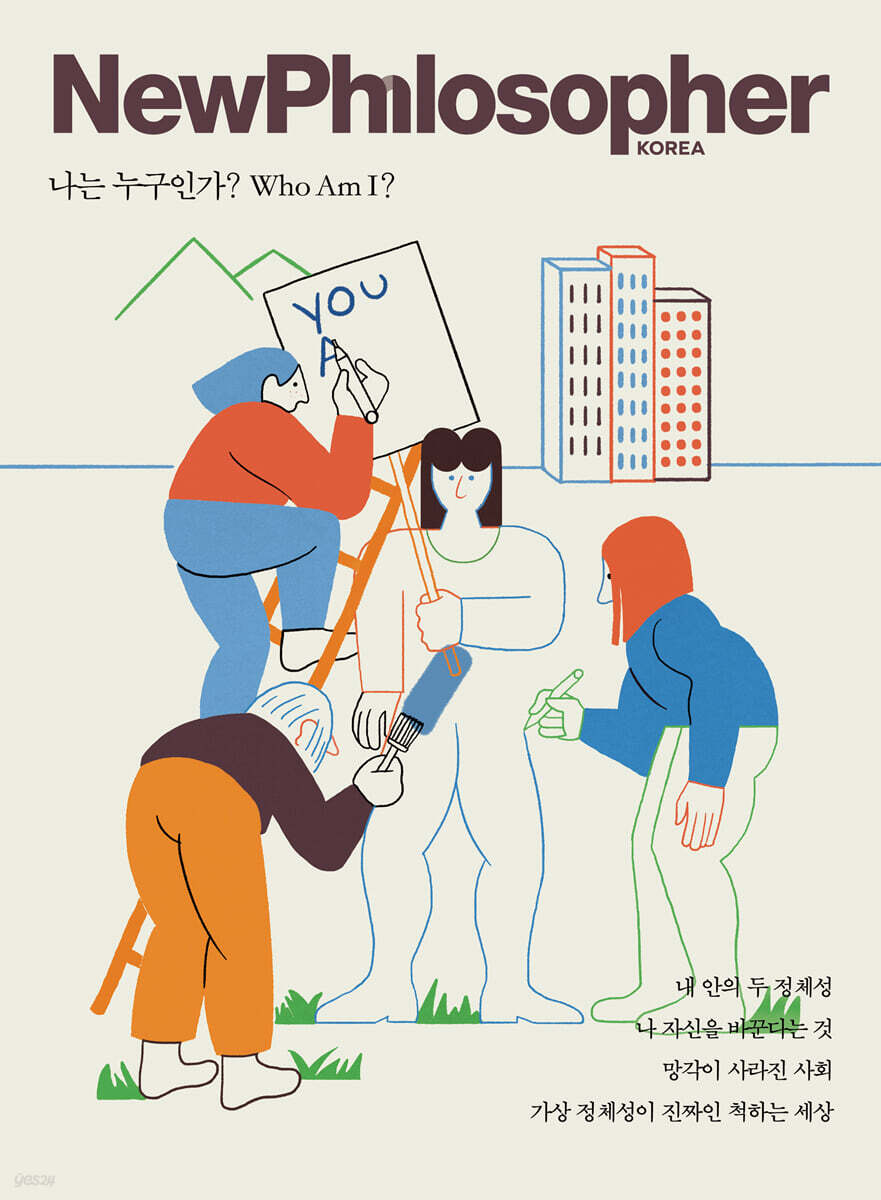
NewPhilosopher (Quarterly): Vol. 17 [2022]
 |
Description
Book Introduction
Lifestyle philosophy magazine New Philosopher, Issue 17
_ “Who Am I?”
“Know thyself!”
The famous ancient Greek adage, “Know thyself,” can be said to be a counter-example to how difficult it is for humans living in harsh reality to “know themselves.”
In that sense, ‘knowing myself’, or the question of identity, is a problem that humanity has faced for a long time, but has not been able to solve easily.
To solve this problem, numerous philosophers have tried to explain the reason for human existence in various ways, but identity does not easily reveal its secrets.
Just as each person has a different face and body type, each person's identity is different and varies depending on the society and community to which they belong.
Scientific achievements have broadened the scope of human inquiry into identity.
Deep scientific exploration of the 'past' has provided a detailed picture of how humanity has evolved, further expanding the discussion of human identity, once confined within the narrow(?) fence called 'God'.
Meanwhile, the remarkable advancements in science and technology seem poised to bring a new turning point to the discussion about our identity.
_ “Who Am I?”
“Know thyself!”
The famous ancient Greek adage, “Know thyself,” can be said to be a counter-example to how difficult it is for humans living in harsh reality to “know themselves.”
In that sense, ‘knowing myself’, or the question of identity, is a problem that humanity has faced for a long time, but has not been able to solve easily.
To solve this problem, numerous philosophers have tried to explain the reason for human existence in various ways, but identity does not easily reveal its secrets.
Just as each person has a different face and body type, each person's identity is different and varies depending on the society and community to which they belong.
Scientific achievements have broadened the scope of human inquiry into identity.
Deep scientific exploration of the 'past' has provided a detailed picture of how humanity has evolved, further expanding the discussion of human identity, once confined within the narrow(?) fence called 'God'.
Meanwhile, the remarkable advancements in science and technology seem poised to bring a new turning point to the discussion about our identity.
index
10 _ News from Nowhere
20_ Feature_ Changing Myself_ Oliver Burkman
26 _ Feature _ Leaving Boldly _ Patrick Stokes
34 _ Interview _ The continuity of the body shapes personal identity _ Eric T.
Olson
46 _ Comic _ The Ship of Theseus _ Corey Moller
48 _ Feature _ The era in which smartphones are our minds _ Tom Chatfield
54 _ Feature _ Social Media, a Battleground of Competing Egos _ Clarissa Seebeck Montefiore
60 _ Feature _ A world where virtual identities pretend to be real _ DBC Pierre
70 _ Feature _ Data is not you _ André Dao
78 _ Feature _ The Soul in Clothes _ Marina Benjamin
88 _ Feature _ The group you belong to determines your identity _ Tim Dean
94 _ Feature _ History, Nation, Identity _ Maisha Cherry
102 _ Feature _ Racial identity is linguistic identity _ Mariana Alessandri
110 _ Feature _ Memory and Identity _ Nigel Warburton
116 _ 6 thinkers _ Identity
118 _ Interview _ A Society Without Forgetting _ Kate Eichhorn
136 _ Reading the Classics _ Two Identities Within Me _ Robert Louis Stevenson
142 _ Reading the Classics _ The Labyrinth of Personal Identity _ David Hume
158 _ I don't want to read the classics! _ Herman Melville
164 _ Our Library
168 _ Interview _ My Life Philosophy 13 Questions and 13 Answers _ Idil Gaziulusoi
20_ Feature_ Changing Myself_ Oliver Burkman
26 _ Feature _ Leaving Boldly _ Patrick Stokes
34 _ Interview _ The continuity of the body shapes personal identity _ Eric T.
Olson
46 _ Comic _ The Ship of Theseus _ Corey Moller
48 _ Feature _ The era in which smartphones are our minds _ Tom Chatfield
54 _ Feature _ Social Media, a Battleground of Competing Egos _ Clarissa Seebeck Montefiore
60 _ Feature _ A world where virtual identities pretend to be real _ DBC Pierre
70 _ Feature _ Data is not you _ André Dao
78 _ Feature _ The Soul in Clothes _ Marina Benjamin
88 _ Feature _ The group you belong to determines your identity _ Tim Dean
94 _ Feature _ History, Nation, Identity _ Maisha Cherry
102 _ Feature _ Racial identity is linguistic identity _ Mariana Alessandri
110 _ Feature _ Memory and Identity _ Nigel Warburton
116 _ 6 thinkers _ Identity
118 _ Interview _ A Society Without Forgetting _ Kate Eichhorn
136 _ Reading the Classics _ Two Identities Within Me _ Robert Louis Stevenson
142 _ Reading the Classics _ The Labyrinth of Personal Identity _ David Hume
158 _ I don't want to read the classics! _ Herman Melville
164 _ Our Library
168 _ Interview _ My Life Philosophy 13 Questions and 13 Answers _ Idil Gaziulusoi
Detailed image

Into the book
At least in terms of personal development, the reason things don't always go as planned is because the very idea of changing yourself is fraught with paradoxical traps.
We desperately want to be different.
But the person who organizes change is the very person I am trying to change.
So, the ‘new me’ can always, inevitably, be a creation of the ‘old me’.
When I plan the right changes, can I rely on my "old self"? If my "old self" were so smart and wise, there would be no need to change in the first place.
--- From "Changing Myself _ Oliver Burkman"
Because I define myself as a biological organism, I believe that my present self and my past self must be the same organism to be the same being.
If so, we must ask what makes present organisms and past organisms the same.
What makes us one organism? 'Memory' cannot be the answer to this question.
The reason why my present self and my past self exist as the same organism is not because I remember the past.
This is because biological functions such as metabolism, development, and immune activity have continued from the past to the present.
The individual identity that is formed over time can be said to be animalistic.
In other words, the continuity of the animal body forms the individual's identity.
Psychological factors are irrelevant.
--- "The continuity of the body shapes personal identity _ Eric T.
From "Olson"
History exists.
History is a series of moments that cannot be erased with the passage of time, so it should not be denied.
History must be taken into account, as historical identity can be recreated in the present.
That way we can set history straight.
If we fail to correct history, the wrong history will remain and we will repeat the same mistakes.
Fortunately, through value creation and proactive action, we can create a new, better identity.
--- From "History, Nation, Identity _ Maisha Cherry"
All data knows about us is the quantifiable information that can be recorded in a dataset.
As we increasingly rely on data and machine learning in our decision-making processes, it becomes increasingly unlikely that we will ever know ourselves in ways that cannot be quantified or datafied.
Perhaps because we recognize the limitations of this data-centric way of understanding ourselves, the latest trend in data analysis is to digitize emotions.
New startups promise to use facial and voice recognition, along with machine learning, to identify emotions like depression, joy, and everything in between.
--- From "Data is not you _ André Dao"
In a way, we are all, to some extent, disconnected from the realities of the past.
Because that's how memory typically works.
And our memories are unstable.
Memory isn't something we go into some filing cabinet and pull out from a folder a precise first-person narrative with photos taken from our perspective.
Rather, each time we pull a memory out of the filing cabinet, we put a slightly different memory back into the folder, sometimes even inserting someone else's story into our own memory.
--- From "Memory and Identity _ Nigel Warburton"
There was no mirror in the room at that time.
The mirror next to me as I write this was brought in later to observe the process of change.
It was the time when night was passing and dawn was turning, but outside, ripe with the day's gestation, it was still dark, and the family was fast asleep.
Excited with hope and a sense of victory, I decided to cross to the bedroom in my new state.
I crossed the courtyard overlooking a constellation of stars.
I could imagine how surprised those stars, who had been watching the night with their eyes wide open, must have been to see a living thing for the first time in their lives.
As I quietly entered the hallway, I realized I was a stranger who had invaded my home.
It was only after I entered the bedroom that I first encountered the figure of Edward Hyde.
We desperately want to be different.
But the person who organizes change is the very person I am trying to change.
So, the ‘new me’ can always, inevitably, be a creation of the ‘old me’.
When I plan the right changes, can I rely on my "old self"? If my "old self" were so smart and wise, there would be no need to change in the first place.
--- From "Changing Myself _ Oliver Burkman"
Because I define myself as a biological organism, I believe that my present self and my past self must be the same organism to be the same being.
If so, we must ask what makes present organisms and past organisms the same.
What makes us one organism? 'Memory' cannot be the answer to this question.
The reason why my present self and my past self exist as the same organism is not because I remember the past.
This is because biological functions such as metabolism, development, and immune activity have continued from the past to the present.
The individual identity that is formed over time can be said to be animalistic.
In other words, the continuity of the animal body forms the individual's identity.
Psychological factors are irrelevant.
--- "The continuity of the body shapes personal identity _ Eric T.
From "Olson"
History exists.
History is a series of moments that cannot be erased with the passage of time, so it should not be denied.
History must be taken into account, as historical identity can be recreated in the present.
That way we can set history straight.
If we fail to correct history, the wrong history will remain and we will repeat the same mistakes.
Fortunately, through value creation and proactive action, we can create a new, better identity.
--- From "History, Nation, Identity _ Maisha Cherry"
All data knows about us is the quantifiable information that can be recorded in a dataset.
As we increasingly rely on data and machine learning in our decision-making processes, it becomes increasingly unlikely that we will ever know ourselves in ways that cannot be quantified or datafied.
Perhaps because we recognize the limitations of this data-centric way of understanding ourselves, the latest trend in data analysis is to digitize emotions.
New startups promise to use facial and voice recognition, along with machine learning, to identify emotions like depression, joy, and everything in between.
--- From "Data is not you _ André Dao"
In a way, we are all, to some extent, disconnected from the realities of the past.
Because that's how memory typically works.
And our memories are unstable.
Memory isn't something we go into some filing cabinet and pull out from a folder a precise first-person narrative with photos taken from our perspective.
Rather, each time we pull a memory out of the filing cabinet, we put a slightly different memory back into the folder, sometimes even inserting someone else's story into our own memory.
--- From "Memory and Identity _ Nigel Warburton"
There was no mirror in the room at that time.
The mirror next to me as I write this was brought in later to observe the process of change.
It was the time when night was passing and dawn was turning, but outside, ripe with the day's gestation, it was still dark, and the family was fast asleep.
Excited with hope and a sense of victory, I decided to cross to the bedroom in my new state.
I crossed the courtyard overlooking a constellation of stars.
I could imagine how surprised those stars, who had been watching the night with their eyes wide open, must have been to see a living thing for the first time in their lives.
As I quietly entered the hallway, I realized I was a stranger who had invaded my home.
It was only after I entered the bedroom that I first encountered the figure of Edward Hyde.
--- From "The Two Identities Within Me _ Robert Louis Stevenson"
Publisher's Review
Social Media: A Battleground for Competing Egos
Issue 17 of New Philosopher explores the broad and profound world of identity under the theme, "Who Am I?"
Identity is an age-old topic that has been discussed since the existence of mankind, but it has always been a topic that provides new food for thought.
In the past, identity was explored primarily by philosophers, but today, ordinary people express their identities through countless words on various social networking services.
It's no exaggeration to say that social media is now a playground, or rather a battlefield, of all kinds of words, as we've been leaving so many records ever since.
So, some people say that it is a place where all of our identities are revealed.
In her book Social Media: A Battleground of Competing Selves, author Clarissa Sibeck Montefiore cites her encounter with a chef whose outer self (the image she presents on Instagram) is different from her inner self (her everyday life), arguing that the world has become one where almost all modern people are accustomed to living with a dual identity.
He describes the psychology of modern people who, regardless of reality, find satisfaction in accumulating likes on posts and images on social media that may seem like deception.
“Sometimes I think about that female chef.
He wasn't a bad person.
He must have been an anxious person.
Perhaps I found solace in the fantasy-filled Instagram life, where I could control everything.”
Humans, who are bound to be weak and insecure beings, always have no choice but to rely on something.
One of them is ‘clothes’.
In “The Soul in Clothes,” author and editor Marina Benjamin argues that for some, clothes evoke memories and nostalgia, and ultimately serve as a mechanism for defining one’s own identity.
We all have our own style, and that can often be linked to our identity.
However, clothes also served as a kind of protective shield that reinforced status and class, and concealed identity by hiding within them.
“It is no coincidence that high fashion has its origins in theatre.
The world of disruptive, cutting-edge fashion demands unconditional trust.
Perhaps this is why Barthes focused on the "synchrony" of fashion. In a way, it seems like all clothing in the world functions in this way.
“In a way that disguises something seamlessly rather than conveying it as is.”
Identity that changes constantly, identity that remains constant
Kate Eichhorn, who teaches cultural and media studies at the New School for New York, vividly demonstrates in her interview, "A Society Without Forgetting," how "forgetting," one of the elements that makes human life flexible, is connected to identity, and how a single line left on social media, in particular, persistently follows modern people through their lives.
Describing the story of a woman who lost her job as a reporter at a magazine because of a potentially racist post she made on social media as a teenager, Eichhorn emphasizes that the mindset of the younger generation, and the identity it encompasses, is constantly changing.
“What I’m trying to say is that students tend to be more open-minded and liberal when they go to college, so we shouldn’t deny them the opportunity to go to college based on the attitudes they displayed in high school.
But that's exactly what's happening right now.
I'm really worried.
“People change between the ages of fifteen and twenty-five, or even thirty.”
If identity changes over time depending on age and environment, there are certainly identities that do not change.
In "Racial Identity Is Linguistic Identity," philosopher Mariana Alessandri points out a new yet old phenomenon of modern society's hatred that requires speaking American English to be accepted as a member of American society.
He laments the reality of various systems taking away one's "mother tongue," pointing out the reality of schools forcing children to take "pronunciation classes" from a Mexican-American philosophy professor who speaks perfect American English as a fifth-generation immigrant, and the reality of large American cities looking askance at children who do not speak New York English.
Even though one's mother tongue contains not only one's individual identity but also one's national identity.
“Where I live, almost everyone has brown skin, so my students never have their American identity questioned because of their complexion.
But linguistic racism constantly threatens their identity.
When schools discourage the use of your native tongue and you are told that your everyday language is unintellectual and un-American, self-awareness, the lifelong task of philosophers, becomes a daunting task.”
An era where fake identities are mistaken for real ones
Modern identity is also influenced by technological change.
For those who live a second life in various social media and online role-playing games, even that is their 'real' identity that defines them.
In "The World Where Virtual Identities Pretend to Be Real," novelist DBC Pierre introduces a friend who collects items for war as well as hobbies like fishing in online role-playing games.
The friend even "dated" in that space, even to the point of genuine "love." DBC Pierre sees the friend as living out his true identity there, as well as in real life.
There wouldn't be a problem if they only revealed their identity in online games, but there are many people all over the world who create virtual identities and cause accidents.
There are countless people today who pretend to be who they are not, such as men pretending to be women, or pretending to be persecuted in Syria when they are not there.
“Moreover, because of the conditions of living as humans, we have developed a keen and innate sense of the identities of others over a long period of time.
Cheating is nothing new.
We already think of anxiety as a trait of boasters, and vulnerability as a trait of shy people.
We can read human codes backwards and upside down.
You can do it without even thinking about it.
A fabricated identity, or even a complete fiction, is a code to the intelligence that devised it.
We can decipher the intelligence that created the fiction through the fiction.
Even the intelligence that created the fiction knows this fact.”
If you think about it, the history of mankind can be said to be a history of contemplating identity.
This may be because the world of identity is that wide and deep.
It doesn't end with you establishing or forging your own identity.
Only when a society's identity is healthy can all its people maintain a healthy life.
Let's embark together on a journey into the world of identity that defines our lives.
Issue 17 of New Philosopher explores the broad and profound world of identity under the theme, "Who Am I?"
Identity is an age-old topic that has been discussed since the existence of mankind, but it has always been a topic that provides new food for thought.
In the past, identity was explored primarily by philosophers, but today, ordinary people express their identities through countless words on various social networking services.
It's no exaggeration to say that social media is now a playground, or rather a battlefield, of all kinds of words, as we've been leaving so many records ever since.
So, some people say that it is a place where all of our identities are revealed.
In her book Social Media: A Battleground of Competing Selves, author Clarissa Sibeck Montefiore cites her encounter with a chef whose outer self (the image she presents on Instagram) is different from her inner self (her everyday life), arguing that the world has become one where almost all modern people are accustomed to living with a dual identity.
He describes the psychology of modern people who, regardless of reality, find satisfaction in accumulating likes on posts and images on social media that may seem like deception.
“Sometimes I think about that female chef.
He wasn't a bad person.
He must have been an anxious person.
Perhaps I found solace in the fantasy-filled Instagram life, where I could control everything.”
Humans, who are bound to be weak and insecure beings, always have no choice but to rely on something.
One of them is ‘clothes’.
In “The Soul in Clothes,” author and editor Marina Benjamin argues that for some, clothes evoke memories and nostalgia, and ultimately serve as a mechanism for defining one’s own identity.
We all have our own style, and that can often be linked to our identity.
However, clothes also served as a kind of protective shield that reinforced status and class, and concealed identity by hiding within them.
“It is no coincidence that high fashion has its origins in theatre.
The world of disruptive, cutting-edge fashion demands unconditional trust.
Perhaps this is why Barthes focused on the "synchrony" of fashion. In a way, it seems like all clothing in the world functions in this way.
“In a way that disguises something seamlessly rather than conveying it as is.”
Identity that changes constantly, identity that remains constant
Kate Eichhorn, who teaches cultural and media studies at the New School for New York, vividly demonstrates in her interview, "A Society Without Forgetting," how "forgetting," one of the elements that makes human life flexible, is connected to identity, and how a single line left on social media, in particular, persistently follows modern people through their lives.
Describing the story of a woman who lost her job as a reporter at a magazine because of a potentially racist post she made on social media as a teenager, Eichhorn emphasizes that the mindset of the younger generation, and the identity it encompasses, is constantly changing.
“What I’m trying to say is that students tend to be more open-minded and liberal when they go to college, so we shouldn’t deny them the opportunity to go to college based on the attitudes they displayed in high school.
But that's exactly what's happening right now.
I'm really worried.
“People change between the ages of fifteen and twenty-five, or even thirty.”
If identity changes over time depending on age and environment, there are certainly identities that do not change.
In "Racial Identity Is Linguistic Identity," philosopher Mariana Alessandri points out a new yet old phenomenon of modern society's hatred that requires speaking American English to be accepted as a member of American society.
He laments the reality of various systems taking away one's "mother tongue," pointing out the reality of schools forcing children to take "pronunciation classes" from a Mexican-American philosophy professor who speaks perfect American English as a fifth-generation immigrant, and the reality of large American cities looking askance at children who do not speak New York English.
Even though one's mother tongue contains not only one's individual identity but also one's national identity.
“Where I live, almost everyone has brown skin, so my students never have their American identity questioned because of their complexion.
But linguistic racism constantly threatens their identity.
When schools discourage the use of your native tongue and you are told that your everyday language is unintellectual and un-American, self-awareness, the lifelong task of philosophers, becomes a daunting task.”
An era where fake identities are mistaken for real ones
Modern identity is also influenced by technological change.
For those who live a second life in various social media and online role-playing games, even that is their 'real' identity that defines them.
In "The World Where Virtual Identities Pretend to Be Real," novelist DBC Pierre introduces a friend who collects items for war as well as hobbies like fishing in online role-playing games.
The friend even "dated" in that space, even to the point of genuine "love." DBC Pierre sees the friend as living out his true identity there, as well as in real life.
There wouldn't be a problem if they only revealed their identity in online games, but there are many people all over the world who create virtual identities and cause accidents.
There are countless people today who pretend to be who they are not, such as men pretending to be women, or pretending to be persecuted in Syria when they are not there.
“Moreover, because of the conditions of living as humans, we have developed a keen and innate sense of the identities of others over a long period of time.
Cheating is nothing new.
We already think of anxiety as a trait of boasters, and vulnerability as a trait of shy people.
We can read human codes backwards and upside down.
You can do it without even thinking about it.
A fabricated identity, or even a complete fiction, is a code to the intelligence that devised it.
We can decipher the intelligence that created the fiction through the fiction.
Even the intelligence that created the fiction knows this fact.”
If you think about it, the history of mankind can be said to be a history of contemplating identity.
This may be because the world of identity is that wide and deep.
It doesn't end with you establishing or forging your own identity.
Only when a society's identity is healthy can all its people maintain a healthy life.
Let's embark together on a journey into the world of identity that defines our lives.
GOODS SPECIFICS
- Date of issue: January 7, 2022
- Page count, weight, size: 168 pages | 180*245*20mm
- ISBN13: 2510598436405
You may also like
카테고리
korean


korean

![GQ KOREA Mark (Monthly): December [2025]](http://librairie.coreenne.fr/cdn/shop/files/8ef265dbbfbf186523ed75ba7319009d.jpg?v=1765340328&width=3840)


