

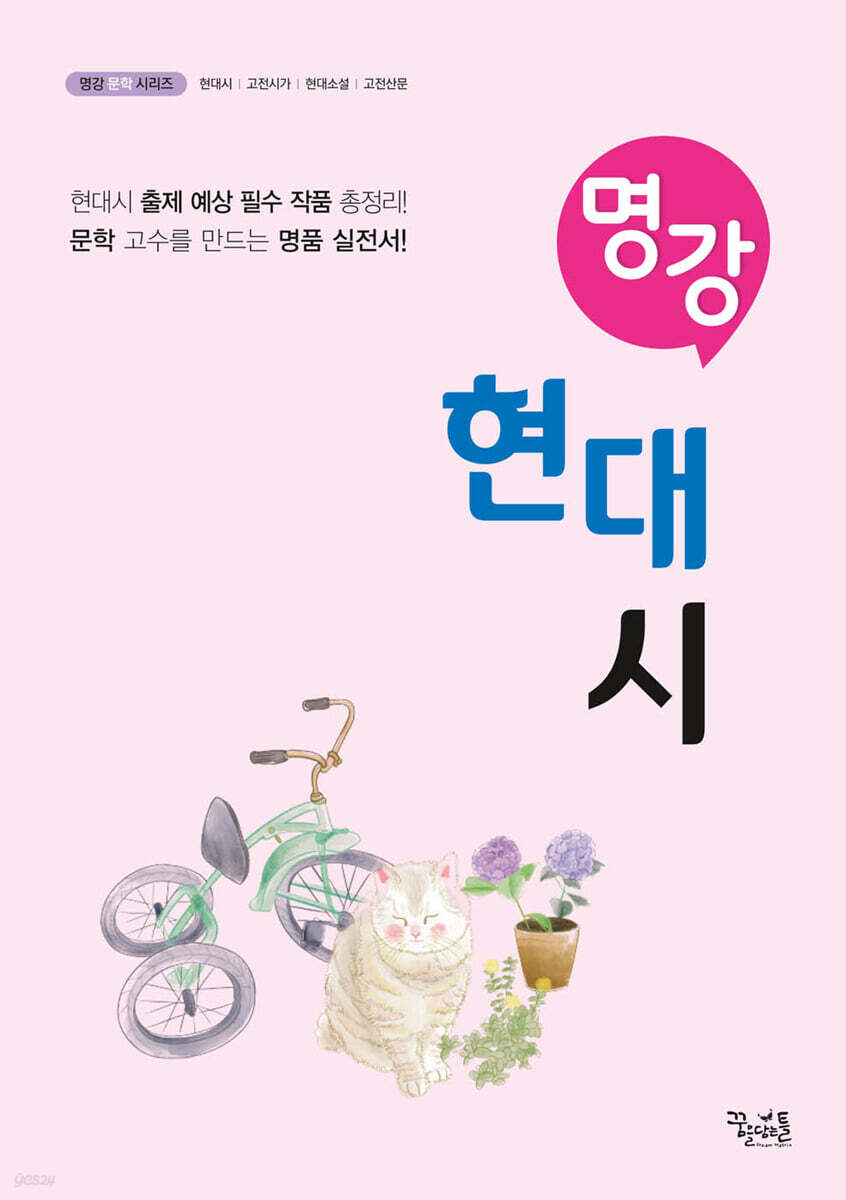
Myeonggang Modern Poetry
 |
Description
Book Introduction
A Masterpiece of Modern Poetry
We have compiled a 'Key Concepts and Poetry Appreciation Manual' to help you develop your ability to analyze works.
Includes 82 major works frequently appearing in textbooks, EBS, evaluation centers, and education office tests.
Presents the latest exam trends and solutions through various types of practical problems.
We have compiled a 'Key Concepts and Poetry Appreciation Manual' to help you develop your ability to analyze works.
Includes 82 major works frequently appearing in textbooks, EBS, evaluation centers, and education office tests.
Presents the latest exam trends and solutions through various types of practical problems.
- You can preview some of the book's contents.
Preview
index
How to Appreciate Modern Poetry
Core concepts of modern poetry
Browse works
Part 1: Practical Study of Modern Poetry
01 Winter Diary_Moon Jeong-hee│Me, Natasha, and the White Donkey_Baek Seok
02 A Winter Night's Dream_Kim Chun-soo│Mokgye Market_Shin Kyeong-rim
03 Flower of the Shade_Na Hee-deok│Life in an Egg 2_Kim Seung-hee
04 Wall_Kim Ki-taek│Upward_Kim Gwang-gyu
05 Spring Rain_Lee Su-bok│On the Mountain and the Hill_Shin Dong-yup
06 Mirror_Ideal│New 1_Park Nam-soo
07 On the Mountain Path_Lee Seong-bu│Easily Written Poem_Yoon Dong-ju
08 Folding Bird_Kim So-wol│Gashinae, Jeolla Province_Lee Yong-ak
09 Pastor_Yuksa Lee│Someone Asked Me_Jongsam Kim
10 Breakfast_Jeong Ji-yong│Agriculture_Shin Kyeong-rim
11 In Front of My Hometown_Oh Jang-hwan│Washing a Shovel in the Sunset River_Jeong Hee-seong
12 Star Counting Night_Yoon Dong-ju│I Don't Know_Han Yong-un
13 Bonfire_Baekseok│At a port near Urajio_Lee Yong-ak
14 Epitaph_Kim Gwang-gyu│Expert_Ki Hyeong-do
15. Geomungo_Kim Young-rang│Heavy Snow Advisory_Choi Seung-ho
16 Tree Investigation 1_Son Taek-su│Next to the Peach Tree_Na Hee-deok
17 Hometown_Jeong Ji-yong│An Afternoon at the Zoo_Jo Ji-hoon
Silence of the 18th_Han Yong-un│Until the Peony Blooms_Kim Young-rang
19. Chuilseojeong_Kim Gwang-gyun│Amazon Aquarium_Choi Seung-ho
20 Standing on the Road_Shin Seok-jeong│Like a Ball That Bounces Even When Dropped_Jeong Hyeon-jong
21 Spring_Lee Seong-bu│Peak_Lee Yuk-sa
22 Empty House_Gihyeongdo│Samsu Gapsan_Kim Sowol
23 Longing_Lee Yong-ak│Hyang-a_Shin Dong-yup
24 I Saw You_Han Yong-un│Noh Shin_Kim Gwang-gyun
25 Memories_Kim Ki-rim│Silhouettes of Mother and Grandmother_Shin Kyeong-rim
26 Scary Night_Ham Hyeong-su│Return to Farming_Baek Seok
27 Spring Snow_Jeong Ji-yong│Morning Image 1_Park Nam-soo
28. Cornelian Cherry Blossoms_Kim So-wol│Flowers_Kim Chun-soo
29 The Temptation of the Blacksmith_Kim Gwang-gyu│Family_Oh Jang-hwan
30 Birth_Yoo Chi-hwan│Experience_Kim Ki-rim
31 Jangsu Mountain 1_Jeong Ji-yong│Dundeokgol, Geoje Island_Yu Chi-hwan
32 The Sea and the Butterfly_Kim Ki-rim│Boy_Yun Dong-ju
Part 2: Complex Practical Learning
33 Mansul's Father's Prayer_Park Mok-wol│Baekhwaboseo_Park Je-ga
34 Songs Across the River_Lee Yuk-sa│Dabangchan_Chae Man-sik
35 The Departing Ship_Park Yong-cheol│Tangungga_Jeong Hoon
36 Natural Time and Literary Time│Antique Costume_Jo Ji-hoon│Father of Freezing_Lee Ik-ik
37 Thoughts of Home_Kim So-wol│Pohwaokgi_Lee Hak-gyu
38 Cheongmyeong_Kim Young-rang│Mountain Village Journey_Lee Sang
39 The Measurement of Love_Han Yong-un│Gyuwon-ga_Heo Nanseolheon
40 The Wind Blows_Yoon Dong-ju│Bird_Kim Ki-taek│Noh Ma-seol_Hong Woo-won
Core concepts of modern poetry
Browse works
Part 1: Practical Study of Modern Poetry
01 Winter Diary_Moon Jeong-hee│Me, Natasha, and the White Donkey_Baek Seok
02 A Winter Night's Dream_Kim Chun-soo│Mokgye Market_Shin Kyeong-rim
03 Flower of the Shade_Na Hee-deok│Life in an Egg 2_Kim Seung-hee
04 Wall_Kim Ki-taek│Upward_Kim Gwang-gyu
05 Spring Rain_Lee Su-bok│On the Mountain and the Hill_Shin Dong-yup
06 Mirror_Ideal│New 1_Park Nam-soo
07 On the Mountain Path_Lee Seong-bu│Easily Written Poem_Yoon Dong-ju
08 Folding Bird_Kim So-wol│Gashinae, Jeolla Province_Lee Yong-ak
09 Pastor_Yuksa Lee│Someone Asked Me_Jongsam Kim
10 Breakfast_Jeong Ji-yong│Agriculture_Shin Kyeong-rim
11 In Front of My Hometown_Oh Jang-hwan│Washing a Shovel in the Sunset River_Jeong Hee-seong
12 Star Counting Night_Yoon Dong-ju│I Don't Know_Han Yong-un
13 Bonfire_Baekseok│At a port near Urajio_Lee Yong-ak
14 Epitaph_Kim Gwang-gyu│Expert_Ki Hyeong-do
15. Geomungo_Kim Young-rang│Heavy Snow Advisory_Choi Seung-ho
16 Tree Investigation 1_Son Taek-su│Next to the Peach Tree_Na Hee-deok
17 Hometown_Jeong Ji-yong│An Afternoon at the Zoo_Jo Ji-hoon
Silence of the 18th_Han Yong-un│Until the Peony Blooms_Kim Young-rang
19. Chuilseojeong_Kim Gwang-gyun│Amazon Aquarium_Choi Seung-ho
20 Standing on the Road_Shin Seok-jeong│Like a Ball That Bounces Even When Dropped_Jeong Hyeon-jong
21 Spring_Lee Seong-bu│Peak_Lee Yuk-sa
22 Empty House_Gihyeongdo│Samsu Gapsan_Kim Sowol
23 Longing_Lee Yong-ak│Hyang-a_Shin Dong-yup
24 I Saw You_Han Yong-un│Noh Shin_Kim Gwang-gyun
25 Memories_Kim Ki-rim│Silhouettes of Mother and Grandmother_Shin Kyeong-rim
26 Scary Night_Ham Hyeong-su│Return to Farming_Baek Seok
27 Spring Snow_Jeong Ji-yong│Morning Image 1_Park Nam-soo
28. Cornelian Cherry Blossoms_Kim So-wol│Flowers_Kim Chun-soo
29 The Temptation of the Blacksmith_Kim Gwang-gyu│Family_Oh Jang-hwan
30 Birth_Yoo Chi-hwan│Experience_Kim Ki-rim
31 Jangsu Mountain 1_Jeong Ji-yong│Dundeokgol, Geoje Island_Yu Chi-hwan
32 The Sea and the Butterfly_Kim Ki-rim│Boy_Yun Dong-ju
Part 2: Complex Practical Learning
33 Mansul's Father's Prayer_Park Mok-wol│Baekhwaboseo_Park Je-ga
34 Songs Across the River_Lee Yuk-sa│Dabangchan_Chae Man-sik
35 The Departing Ship_Park Yong-cheol│Tangungga_Jeong Hoon
36 Natural Time and Literary Time│Antique Costume_Jo Ji-hoon│Father of Freezing_Lee Ik-ik
37 Thoughts of Home_Kim So-wol│Pohwaokgi_Lee Hak-gyu
38 Cheongmyeong_Kim Young-rang│Mountain Village Journey_Lee Sang
39 The Measurement of Love_Han Yong-un│Gyuwon-ga_Heo Nanseolheon
40 The Wind Blows_Yoon Dong-ju│Bird_Kim Ki-taek│Noh Ma-seol_Hong Woo-won
Detailed image

Publisher's Review
[characteristic]
1.
A textbook that improves your ability to appreciate poetry through core concepts, methods for appreciating works, and a poetry appreciation manual.
2.
A textbook that allows you to improve your practical skills for the CSAT by studying works that are likely to appear on the exam.
3.
A textbook that allows you to learn the latest trends in exam questions and their solutions through practical and branched practice problems of modern poetry.
[composition]
① Appreciation method?&? Concept learning
1) Training in appreciating modern poetry
- Since unfamiliar modern poetry works are often tested on the college entrance exam or mock exams, the ability to understand and analyze works seen for the first time is necessary.
- Learn the order and method of analyzing modern poetry through the activity problems presented in ‘How to Appreciate Modern Poetry.’
2) Learning core concepts of modern poetry
- The concept of modern poetry is the foundation for correct understanding of works and problem solving.
- Carefully study the concepts presented in 'Key Concepts of Modern Poetry' and check how they are applied to the problem.
② Studying the work
1) Appreciating the work and understanding its contents
- Poetry is written in concise language, making it difficult to grasp its meaning.
Appreciate the work while thinking about what the poet is trying to convey to the reader.
-? Infer the content and meaning of the poem by paying attention to the situation and atmosphere of the poem, the emotions and attitude of the poetic speaker, and repeated poetic words.
2) Organize the content according to the 'Poetry Appreciation Manual'
-? Analyze the work according to the format of the 'Poetry Appreciation Manual', which presents the order of analysis of the work according to the composition of the poem.
- Organize the content of the work in the order presented, such as ‘poetic speaker and poetic situation, speaker’s emotions and attitude, meaning of poetic language, expressive characteristics, and theme.’
③ Learning practical problems
1) Solve and grade problems as if taking a test.
- When solving a problem for the first time, solve the problem quickly and get graded as if you were taking a test.
- After grading, re-solve the problems you got wrong or the problems you got right but were confused about, and check the reasons why they are correct or incorrect through the ‘Answer and Explanation’.
2) Learn how to solve problems
- The 〈option〉 or choice attached to the problem may also provide a clue to solving other problems.
- ?In the process of solving a problem, you establish your own problem-solving method.
④ Use and review the 'Answers and Explanations'
1) Use of ‘Answers and Explanations’
- If you got the question wrong, look at the 'Answer and Explanation' to figure out why you got it wrong.
- Even if it is a correct question, check whether your solution was appropriate by referring to the ‘Answer and Explanation’.
2) Establish a review plan
- For problems that you got wrong even once or are still confusing even after looking at them again, study the content of the work again and then try solving the problem again.
- After organizing the types of mistakes you frequently make, focus on studying them so that you don't repeat the same mistakes.
1.
A textbook that improves your ability to appreciate poetry through core concepts, methods for appreciating works, and a poetry appreciation manual.
2.
A textbook that allows you to improve your practical skills for the CSAT by studying works that are likely to appear on the exam.
3.
A textbook that allows you to learn the latest trends in exam questions and their solutions through practical and branched practice problems of modern poetry.
[composition]
① Appreciation method?&? Concept learning
1) Training in appreciating modern poetry
- Since unfamiliar modern poetry works are often tested on the college entrance exam or mock exams, the ability to understand and analyze works seen for the first time is necessary.
- Learn the order and method of analyzing modern poetry through the activity problems presented in ‘How to Appreciate Modern Poetry.’
2) Learning core concepts of modern poetry
- The concept of modern poetry is the foundation for correct understanding of works and problem solving.
- Carefully study the concepts presented in 'Key Concepts of Modern Poetry' and check how they are applied to the problem.
② Studying the work
1) Appreciating the work and understanding its contents
- Poetry is written in concise language, making it difficult to grasp its meaning.
Appreciate the work while thinking about what the poet is trying to convey to the reader.
-? Infer the content and meaning of the poem by paying attention to the situation and atmosphere of the poem, the emotions and attitude of the poetic speaker, and repeated poetic words.
2) Organize the content according to the 'Poetry Appreciation Manual'
-? Analyze the work according to the format of the 'Poetry Appreciation Manual', which presents the order of analysis of the work according to the composition of the poem.
- Organize the content of the work in the order presented, such as ‘poetic speaker and poetic situation, speaker’s emotions and attitude, meaning of poetic language, expressive characteristics, and theme.’
③ Learning practical problems
1) Solve and grade problems as if taking a test.
- When solving a problem for the first time, solve the problem quickly and get graded as if you were taking a test.
- After grading, re-solve the problems you got wrong or the problems you got right but were confused about, and check the reasons why they are correct or incorrect through the ‘Answer and Explanation’.
2) Learn how to solve problems
- The 〈option〉 or choice attached to the problem may also provide a clue to solving other problems.
- ?In the process of solving a problem, you establish your own problem-solving method.
④ Use and review the 'Answers and Explanations'
1) Use of ‘Answers and Explanations’
- If you got the question wrong, look at the 'Answer and Explanation' to figure out why you got it wrong.
- Even if it is a correct question, check whether your solution was appropriate by referring to the ‘Answer and Explanation’.
2) Establish a review plan
- For problems that you got wrong even once or are still confusing even after looking at them again, study the content of the work again and then try solving the problem again.
- After organizing the types of mistakes you frequently make, focus on studying them so that you don't repeat the same mistakes.
GOODS SPECIFICS
- Publication date: November 15, 2023
- Page count, weight, size: 144 pages | 210*297*20mm
- ISBN13: 9788963912660
- ISBN10: 8963912663
You may also like
카테고리
korean


korean

![GQ KOREA Mark (Monthly): December [2025]](http://librairie.coreenne.fr/cdn/shop/files/8ef265dbbfbf186523ed75ba7319009d.jpg?v=1765340328&width=3840)


