

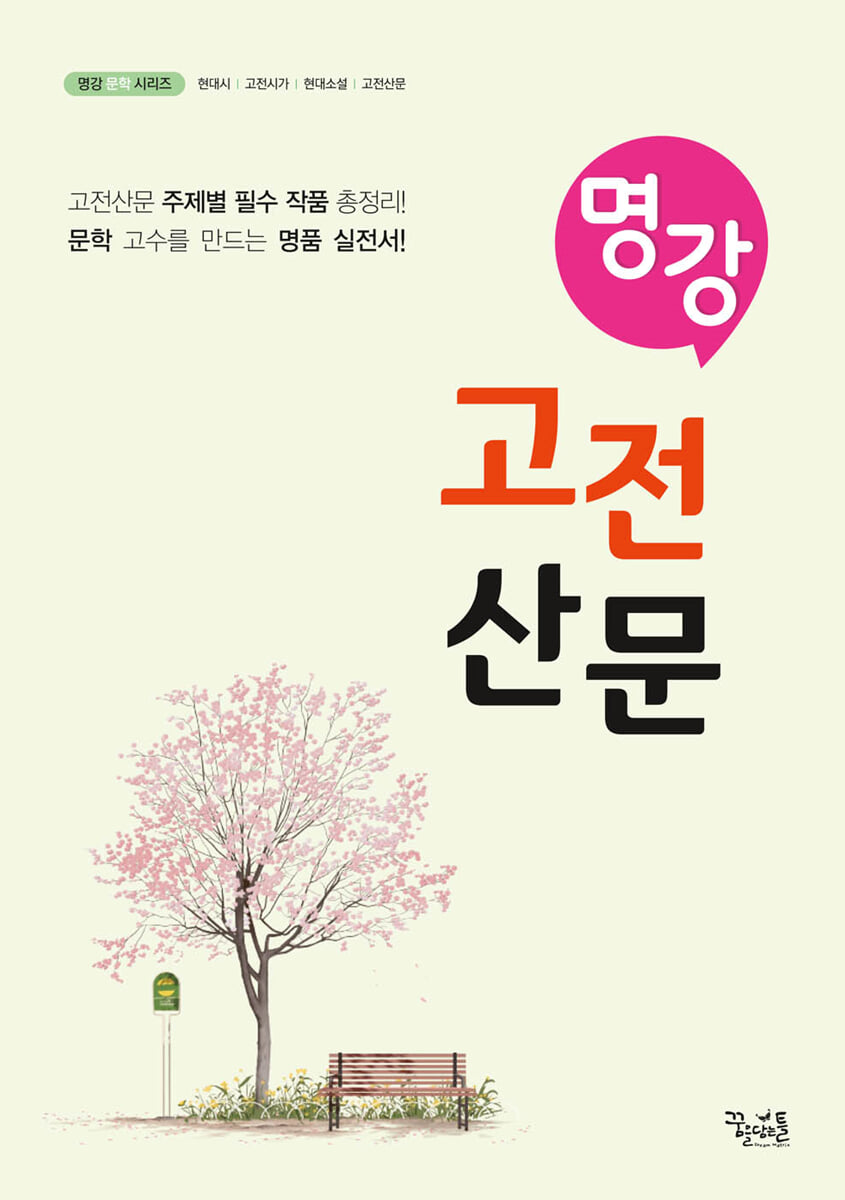
Myunggang Classical Prose
 |
Description
Book Introduction
A masterpiece of classical prose
I have summarized the types of questions on the CSAT and the core concepts that underlie them.
Includes essential works frequently appearing in textbooks, EBS, evaluation centers, and education offices by subject.
Presents the latest exam trends and solutions through various types of practical problems.
I have summarized the types of questions on the CSAT and the core concepts that underlie them.
Includes essential works frequently appearing in textbooks, EBS, evaluation centers, and education offices by subject.
Presents the latest exam trends and solutions through various types of practical problems.
- You can preview some of the book's contents.
Preview
index
Part 1: Learning Concepts & Types
01 Character's personality, psychology, and attitude_Jangpungunjeon
02 Narrative Features and Effects_So Hyeon Seong-rok
03 Development and Composition of the Story_The Tale of Jeon Woo-chi
04 Aspects of Conflict_Jeongbijeon
05 Functions of Background and Materials_Sukhyangjeon
06 Appropriateness of Appreciation_Park Tae-bo's Biography
Part 2: Practical Learning
1.
romantic novel
① Chunhyangjeon
② Before operation
③ Chaebonggambyeolgok
④ The Tale of Sukyeongnangja
⑤ Sukhyangjeon
⑥ Ha Saeng Gi Woo Jeon_Singwanghan
⑦ Manboksa Temple's abandonment_Kim Si-seup
⑧ Lee Saeng-gyu Jang-jeon_Kim Si-seup
2.
heroic novels
① The Story of Yu Chung-ryeol
② Jeon Woo-chi Jeon
③ Jo Woong-jeon
④ Im Gyeong-eopjeon
⑤ Park's Jeon
⑥ Honggyewoljeon
⑦ Jeongsujeongjeon
⑧ Top driving
3.
War and historical novels
① Imjinrok
② Choi Cheok-jeon_Jo Wi-han
③ Park Tae-bojeon
4.
satirical and moral novels
① Heungbojeon
② Lee Chun-pung's Tale
③ Gwangmunjajeon_Park Ji-won
④ Onggojipjeon
⑤ Loading the arsenal
5.
Family and family novels
① The Story of Sassi Namjeong_Kim Man-jung
② The Tale of Wolyeongnang
③ Changseongam Uirok_Jo Seong-gi
④ Yu's Three Genealogies
6.
fable novel
① Bait war
② Stork Song
7.
sleepwalking novel
① The Dream of the Stolen Dream_Kim Man-jung
② Wonseng Dream Record_Imje
8.
Home appliances & Pansori private
① Battle of Imchun
② Simcheongga
9.
Essays & Plays
① Suojaegi_Jeong Yak-yong
② Puppet Play│Hahoe Byeolsingut Mask Dance
01 Character's personality, psychology, and attitude_Jangpungunjeon
02 Narrative Features and Effects_So Hyeon Seong-rok
03 Development and Composition of the Story_The Tale of Jeon Woo-chi
04 Aspects of Conflict_Jeongbijeon
05 Functions of Background and Materials_Sukhyangjeon
06 Appropriateness of Appreciation_Park Tae-bo's Biography
Part 2: Practical Learning
1.
romantic novel
① Chunhyangjeon
② Before operation
③ Chaebonggambyeolgok
④ The Tale of Sukyeongnangja
⑤ Sukhyangjeon
⑥ Ha Saeng Gi Woo Jeon_Singwanghan
⑦ Manboksa Temple's abandonment_Kim Si-seup
⑧ Lee Saeng-gyu Jang-jeon_Kim Si-seup
2.
heroic novels
① The Story of Yu Chung-ryeol
② Jeon Woo-chi Jeon
③ Jo Woong-jeon
④ Im Gyeong-eopjeon
⑤ Park's Jeon
⑥ Honggyewoljeon
⑦ Jeongsujeongjeon
⑧ Top driving
3.
War and historical novels
① Imjinrok
② Choi Cheok-jeon_Jo Wi-han
③ Park Tae-bojeon
4.
satirical and moral novels
① Heungbojeon
② Lee Chun-pung's Tale
③ Gwangmunjajeon_Park Ji-won
④ Onggojipjeon
⑤ Loading the arsenal
5.
Family and family novels
① The Story of Sassi Namjeong_Kim Man-jung
② The Tale of Wolyeongnang
③ Changseongam Uirok_Jo Seong-gi
④ Yu's Three Genealogies
6.
fable novel
① Bait war
② Stork Song
7.
sleepwalking novel
① The Dream of the Stolen Dream_Kim Man-jung
② Wonseng Dream Record_Imje
8.
Home appliances & Pansori private
① Battle of Imchun
② Simcheongga
9.
Essays & Plays
① Suojaegi_Jeong Yak-yong
② Puppet Play│Hahoe Byeolsingut Mask Dance
Detailed image

Publisher's Review
[characteristic]
1.
A textbook that lays a solid foundation by presenting frequently appearing CSAT question types and the core concepts underlying them.
2.
A textbook that allows you to prepare for the CSAT and internal exams by studying essential works by topic.
3.
A textbook that allows you to learn the latest exam trends and solutions through various types of practical problems.
[composition]
① Learning concepts and types
1) Learning core concepts of classical prose
- In order to properly understand the work and solve problems, you must have a thorough understanding of the main concepts.
- Study the concepts presented in 'Key Concepts' carefully and check how those concepts are applied to the problem.
2) Learning the types of questions through past exam questions
- If you are not familiar with the types of questions that appear on the CSAT, you may be confused when you take the actual test.
- Check the types of questions on the CSAT through past exam questions and learn how to solve them.
② Studying the work
1) Appreciating the work and understanding its contents
- Since many Chinese characters are used and the writing style is unfamiliar, it is often difficult to interpret the work, so you should develop your skills by reading many classical prose works on a regular basis.
- Appreciate the work by focusing on the relationships between characters and think about the development of the story and the theme of the work.
2) Summary of the work's key contents
- Since the number of classical prose works that can be tested is limited, works that have already been tested may be tested again.
- Thoroughly organize the key points of the work through given learning elements such as summary, deconstruction of the work, core of the work, and overview.
③ Learning practical problems
1) Solve and grade problems as if taking a test.
- When solving a problem for the first time, solve the problem quickly and get graded as if you were taking a test.
- After grading, re-solve the problems you got wrong or the problems you got right but were confused about, and check the reasons why they are correct or incorrect through the ‘Answer and Explanation’.
2) Learn how to solve problems
- The 〈option〉 or choice attached to the problem may also provide a clue to solving other problems.
- In the process of solving a problem, you establish your own problem-solving method.
④ Use and review the 'Answers and Explanations'
1) Use of ‘Answers and Explanations’
- If you got the question wrong, look at the ‘answer and explanation’ to figure out why you got it wrong.
- Even if you get the question right, check whether your solution was appropriate by referring to the ‘Answer and Explanation’.
2) Establish a review plan
- For problems that you got wrong even once or are still confusing even after looking at them again, study the content of the work again and then try solving the problem again.
- ? After organizing the types of mistakes you frequently make, study them intensively to avoid repeating the same mistakes.
1.
A textbook that lays a solid foundation by presenting frequently appearing CSAT question types and the core concepts underlying them.
2.
A textbook that allows you to prepare for the CSAT and internal exams by studying essential works by topic.
3.
A textbook that allows you to learn the latest exam trends and solutions through various types of practical problems.
[composition]
① Learning concepts and types
1) Learning core concepts of classical prose
- In order to properly understand the work and solve problems, you must have a thorough understanding of the main concepts.
- Study the concepts presented in 'Key Concepts' carefully and check how those concepts are applied to the problem.
2) Learning the types of questions through past exam questions
- If you are not familiar with the types of questions that appear on the CSAT, you may be confused when you take the actual test.
- Check the types of questions on the CSAT through past exam questions and learn how to solve them.
② Studying the work
1) Appreciating the work and understanding its contents
- Since many Chinese characters are used and the writing style is unfamiliar, it is often difficult to interpret the work, so you should develop your skills by reading many classical prose works on a regular basis.
- Appreciate the work by focusing on the relationships between characters and think about the development of the story and the theme of the work.
2) Summary of the work's key contents
- Since the number of classical prose works that can be tested is limited, works that have already been tested may be tested again.
- Thoroughly organize the key points of the work through given learning elements such as summary, deconstruction of the work, core of the work, and overview.
③ Learning practical problems
1) Solve and grade problems as if taking a test.
- When solving a problem for the first time, solve the problem quickly and get graded as if you were taking a test.
- After grading, re-solve the problems you got wrong or the problems you got right but were confused about, and check the reasons why they are correct or incorrect through the ‘Answer and Explanation’.
2) Learn how to solve problems
- The 〈option〉 or choice attached to the problem may also provide a clue to solving other problems.
- In the process of solving a problem, you establish your own problem-solving method.
④ Use and review the 'Answers and Explanations'
1) Use of ‘Answers and Explanations’
- If you got the question wrong, look at the ‘answer and explanation’ to figure out why you got it wrong.
- Even if you get the question right, check whether your solution was appropriate by referring to the ‘Answer and Explanation’.
2) Establish a review plan
- For problems that you got wrong even once or are still confusing even after looking at them again, study the content of the work again and then try solving the problem again.
- ? After organizing the types of mistakes you frequently make, study them intensively to avoid repeating the same mistakes.
GOODS SPECIFICS
- Publication date: November 15, 2023
- Page count, weight, size: 160 pages | 210*297*20mm
- ISBN13: 9788963912714
- ISBN10: 896391271X
You may also like
카테고리
korean


korean

![GQ KOREA Mark (Monthly): December [2025]](http://librairie.coreenne.fr/cdn/shop/files/8ef265dbbfbf186523ed75ba7319009d.jpg?v=1765340328&width=3840)


