

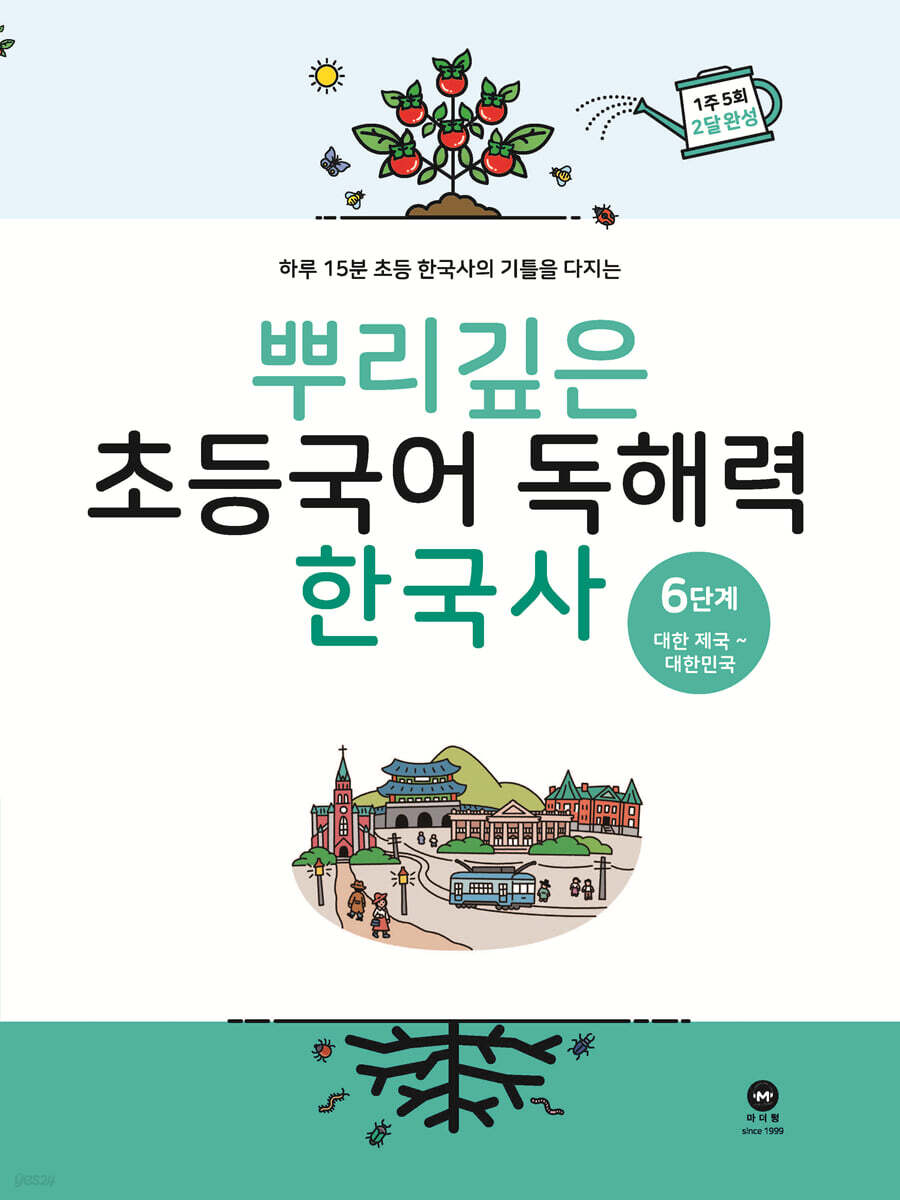
Deep-rooted Elementary Korean Reading Comprehension Korean History Level 6
 |
Description
Book Introduction
"Deep-Rooted Elementary Korean Reading Comprehension Korean History" helps lay the foundation for elementary Korean history.
This is an elementary Korean history textbook that teaches Korean history through fun texts every day.
It contains vivid stories of Korean history in various texts, including explanatory texts, plays, literary works, and practical writing.
We thoroughly review the Korean history content in the text through various types of questions, including Korean language reading comprehension questions, advanced questions, descriptive questions, and Korean History Proficiency Test-style questions.
The story of Korean history from prehistoric times to the Republic of Korea is organized in chronological order, allowing readers to understand it in one flow.
Let's learn difficult and unfamiliar Korean history stories in a fun and effective way with the 『Deep-Rooted Elementary Korean Reading Comprehension Korean History』 textbook, which contains various types of texts and problems.
This is an elementary Korean history textbook that teaches Korean history through fun texts every day.
It contains vivid stories of Korean history in various texts, including explanatory texts, plays, literary works, and practical writing.
We thoroughly review the Korean history content in the text through various types of questions, including Korean language reading comprehension questions, advanced questions, descriptive questions, and Korean History Proficiency Test-style questions.
The story of Korean history from prehistoric times to the Republic of Korea is organized in chronological order, allowing readers to understand it in one flow.
Let's learn difficult and unfamiliar Korean history stories in a fun and effective way with the 『Deep-Rooted Elementary Korean Reading Comprehension Korean History』 textbook, which contains various types of texts and problems.
- You can preview some of the book's contents.
Preview
index
Week 1.
Interference by great powers after the opening of the country
Episode 1 - Gapsin Coup
Episode 2 - Donghak Peasant Revolution
Episode 3 - Gabo Reform
Episode 4 - The Eulmi Incident and the Deportation of the Russian Legation
Episode 5 - Independence Association
Week 2.
Acceptance of modern civilization
Episode 6 - Modern School
Episode 7 - Modern facilities installed after the opening of the port
Episode 8 - Modern Newspaper
Episode 9 - Lights and Telephones
Episode 10 - Trams and Railroads
Week 3.
Japanese invasion
Episode 11 - Proclamation of the Korean Empire and the Gwangmu Reform
Episode 12 - The Japanese Invasion of Korea
Episode 13 - The Eulsa Treaty and the Hague Special Envoy
Episode 14 - Anti-Japanese Righteous Army Movement
Episode 15 - Gyeongsul National Shame
Week 4.
Japanese rule and Korean resistance
Episode 16 - Japanese colonial rule
Episode 17 - Economic Exploitation
Episode 18 - Ahn Chang-ho
Episode 19 - March 1st Movement
Episode 20 - Provisional Government of the Republic of Korea
Week 5.
Anti-Japanese movements at home and abroad
Episode 21 - Divide and Rule
Episode 22 - Domestic Anti-Japanese Struggle
Episode 23 - Anti-Japanese Struggle Abroad
Episode 24 - Righteous Army
Episode 25 - Gwangju Student Anti-Japanese Movement
Week 6.
Efforts to reclaim the country
Episode 26 - The Policy of Ethnic Genocide
Episode 27 - Exploitation for War
28th - Korean Language Society
Episode 29 - Korean Patriotic Corps
Episode 30 - Preparing for Independence
Week 7.
Liberation and the establishment of the Republic of Korea government
Episode 31 - August 15 Liberation Day
Episode 32 - Trusteeship and Division
33rd - Establishment of the Republic of Korea Government
34th - Constitution
Episode 35 - The Korean War
Week 8.
Development of South Korea
Episode 36 - The Development of Democracy
Episode 37 - Economic Growth
Episode 38 - Real-Name Financial Transactions and the Foreign Exchange Crisis
Episode 39 - Olympics and World Cup
Episode 40 - Efforts for Unification
Interference by great powers after the opening of the country
Episode 1 - Gapsin Coup
Episode 2 - Donghak Peasant Revolution
Episode 3 - Gabo Reform
Episode 4 - The Eulmi Incident and the Deportation of the Russian Legation
Episode 5 - Independence Association
Week 2.
Acceptance of modern civilization
Episode 6 - Modern School
Episode 7 - Modern facilities installed after the opening of the port
Episode 8 - Modern Newspaper
Episode 9 - Lights and Telephones
Episode 10 - Trams and Railroads
Week 3.
Japanese invasion
Episode 11 - Proclamation of the Korean Empire and the Gwangmu Reform
Episode 12 - The Japanese Invasion of Korea
Episode 13 - The Eulsa Treaty and the Hague Special Envoy
Episode 14 - Anti-Japanese Righteous Army Movement
Episode 15 - Gyeongsul National Shame
Week 4.
Japanese rule and Korean resistance
Episode 16 - Japanese colonial rule
Episode 17 - Economic Exploitation
Episode 18 - Ahn Chang-ho
Episode 19 - March 1st Movement
Episode 20 - Provisional Government of the Republic of Korea
Week 5.
Anti-Japanese movements at home and abroad
Episode 21 - Divide and Rule
Episode 22 - Domestic Anti-Japanese Struggle
Episode 23 - Anti-Japanese Struggle Abroad
Episode 24 - Righteous Army
Episode 25 - Gwangju Student Anti-Japanese Movement
Week 6.
Efforts to reclaim the country
Episode 26 - The Policy of Ethnic Genocide
Episode 27 - Exploitation for War
28th - Korean Language Society
Episode 29 - Korean Patriotic Corps
Episode 30 - Preparing for Independence
Week 7.
Liberation and the establishment of the Republic of Korea government
Episode 31 - August 15 Liberation Day
Episode 32 - Trusteeship and Division
33rd - Establishment of the Republic of Korea Government
34th - Constitution
Episode 35 - The Korean War
Week 8.
Development of South Korea
Episode 36 - The Development of Democracy
Episode 37 - Economic Growth
Episode 38 - Real-Name Financial Transactions and the Foreign Exchange Crisis
Episode 39 - Olympics and World Cup
Episode 40 - Efforts for Unification
Detailed image

Publisher's Review
An elementary Korean history textbook that teaches you how to study Korean history with fun texts every day.
"Deep-Rooted Elementary Korean Reading Comprehension: Korean History" helps lay the foundation for elementary Korean history.
Learn difficult and unfamiliar Korean history stories in a fun and effective way with the "Deep-Rooted Elementary Korean Reading Comprehension Korean History" textbook, which contains various types of texts and problems.
1.
A vivid story of Korean history delivered through a variety of texts, including explanatory texts, plays, literary works, and practical writing.
2.
Thoroughly review the Korean history content in the text with various types of questions, including Korean language reading comprehension questions, advanced questions, descriptive questions, and Korean History Proficiency Test-style questions.
3.
The structure allows for a unified understanding of the story of Korean history from prehistoric times to the Republic of Korea through each stage organized in chronological order.
4.
Helpful appendix for studying Korean history:
* 'Korean History Chronology' that summarizes the contents of each stage
* 'Korean History Index' that allows you to search for content included in each level of textbooks using keywords
* 'Reading Comprehension Tree' and 'Self-Study Sticker' to record your learning progress in the textbook
* 'Korean History Summary Note' that summarizes only the content covered in the Korean History Proficiency Test among the content learned each week
※The text in this textbook is written at a reading level suitable for students in grades 3 to 6.
"Deep-Rooted Elementary Korean Reading Comprehension: Korean History" helps lay the foundation for elementary Korean history.
Learn difficult and unfamiliar Korean history stories in a fun and effective way with the "Deep-Rooted Elementary Korean Reading Comprehension Korean History" textbook, which contains various types of texts and problems.
1.
A vivid story of Korean history delivered through a variety of texts, including explanatory texts, plays, literary works, and practical writing.
2.
Thoroughly review the Korean history content in the text with various types of questions, including Korean language reading comprehension questions, advanced questions, descriptive questions, and Korean History Proficiency Test-style questions.
3.
The structure allows for a unified understanding of the story of Korean history from prehistoric times to the Republic of Korea through each stage organized in chronological order.
4.
Helpful appendix for studying Korean history:
* 'Korean History Chronology' that summarizes the contents of each stage
* 'Korean History Index' that allows you to search for content included in each level of textbooks using keywords
* 'Reading Comprehension Tree' and 'Self-Study Sticker' to record your learning progress in the textbook
* 'Korean History Summary Note' that summarizes only the content covered in the Korean History Proficiency Test among the content learned each week
※The text in this textbook is written at a reading level suitable for students in grades 3 to 6.
GOODS SPECIFICS
- Date of issue: June 16, 2023
- Page count, weight, size: 208 pages | 225*300*20mm
- ISBN13: 9791168593183
- ISBN10: 1168593182
You may also like
카테고리
korean


korean

![GQ KOREA Mark (Monthly): December [2025]](http://librairie.coreenne.fr/cdn/shop/files/8ef265dbbfbf186523ed75ba7319009d.jpg?v=1765340328&width=3840)


