

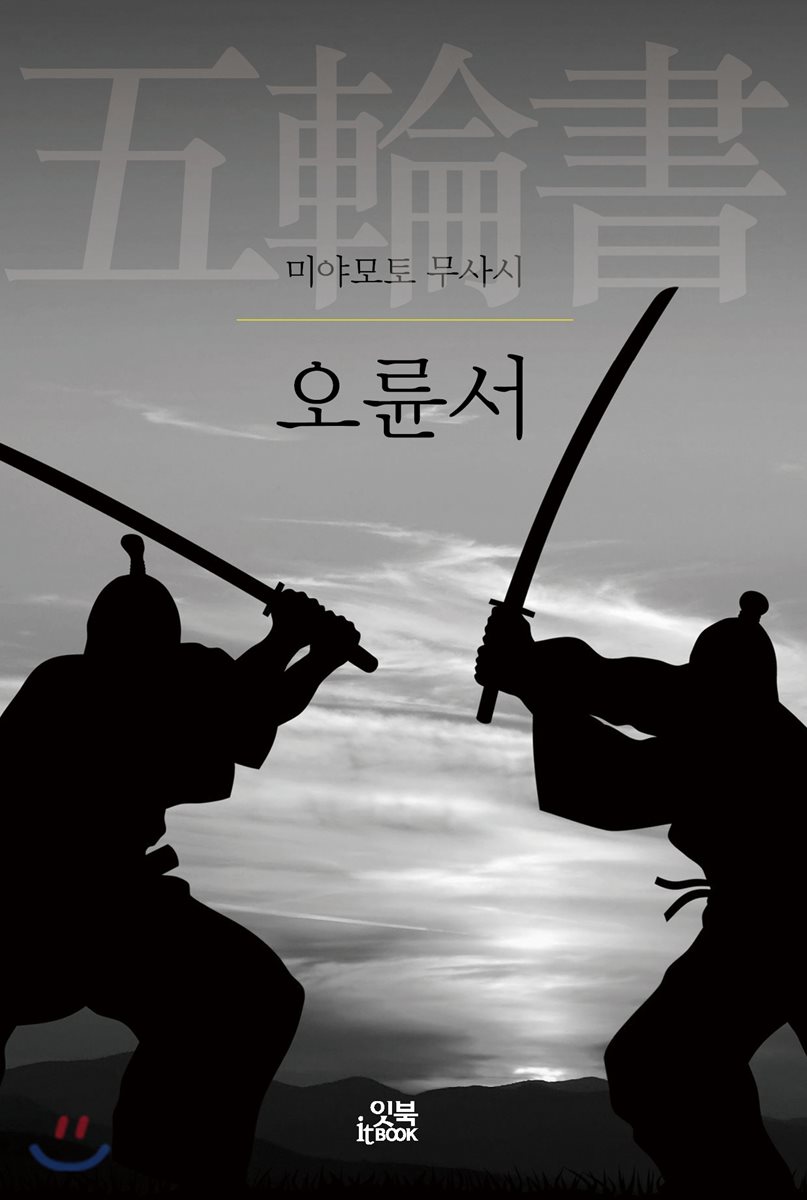
The Book of Five Rings
 |
Description
Book Introduction
The Book of Five Rings, which is considered one of the world's three greatest military strategy books along with The Art of War and On War, is not only a book on military strategy, but also the best success strategy book and self-development book that teaches the mindset and attitude to win (succeed) in the field of battle where the opponent, situation, and environment change every time, as well as the methods and techniques to always win (succeed).
Former GE Chairman Jack Welch praised this book, saying, “It is a great book on world-class military theory, and the tactical principles described in this book are a great example for both companies and individuals seeking success.” Despite being a book on military strategy written over 370 years ago, it is still widely loved as a must-read for businesspeople around the world.
Former GE Chairman Jack Welch praised this book, saying, “It is a great book on world-class military theory, and the tactical principles described in this book are a great example for both companies and individuals seeking success.” Despite being a book on military strategy written over 370 years ago, it is still widely loved as a must-read for businesspeople around the world.
index
The Rights of the Earth_13
Introduction / The Path of the Art of War / The Reason Why the Path of the Art of War Was Likened to a Carpenter / The Path of the Art of War / The Reason This Book of the Art of War Has Five Volumes / The Reason I Named My Art of War 'Nitoryu' / Understanding the Meaning of the Two Characters of the Art of War / Knowing the Usefulness of Weapons in the Art of War / The Beat of the Art of War
Water Volume 47
The mindset in military strategy/Stances for combat/Eyes in combat/How to grab a dachi/How to use the feet/Five-directional aiming stances/The so-called “way of dachi”/The first stance, middle stance, of the five aiming stances/The second stance, top stance/The third stance, bottom stance/The fourth stance, left side stance/The fifth stance, right side stance/The lesson of having a stance and yet not having a stance/Single beat strike/Double beat/Strike without thoughts and feelings/Strike with flowing water/Strike with the edge/Thunder strike/Strike with maple leaves/The body that turns into a dachi/Strike and bump/The body of a short-armed monkey/The body of lacquer and glue/Testing one’s height/Persevering/Bruising/Three hits/Stabbing the face/Stabbing the chest/Growing up spirit/Counterattack/The degree of multiple hits/The advantage of a counterattack/One strike/The degree of direct penetration
Fist of Fire_93
Depending on the location/Three ways to strike first/Press the pillow/Pass the sword/Reading the situation/Tread the sword/Don't miss the moment of collapse/Get into the enemy's shoes/Unravel the four hands/Move the shadow/Press the shadow/Move/Raise the threat/Threaten/Tangle/Strike the corner/Make the enemy confused/Three voices/Creating chaos/Destroying/Intersection of mountains and seas/Pull out by the roots/Becoming new/The head of a rat, the neck of an ox/Knowing the generals/Putting down the sword handle/A body like a rock
Wind's Fist_131
Why other schools prefer long tachis / What other schools call strong tachis / What other schools use short tachis / What other schools have many tachi techniques / What other schools use tachi postures / What other schools pay attention to / How to move your feet in other schools / The attitude that emphasizes speed in other tactics / The basics and secrets of other schools
Ball's Rights_155
Miyamoto Musashi and the Book of Five Rings_159
The Life of Miyamoto Musashi/The Dokkeododo/Artist Miyamoto Musashi
Introduction / The Path of the Art of War / The Reason Why the Path of the Art of War Was Likened to a Carpenter / The Path of the Art of War / The Reason This Book of the Art of War Has Five Volumes / The Reason I Named My Art of War 'Nitoryu' / Understanding the Meaning of the Two Characters of the Art of War / Knowing the Usefulness of Weapons in the Art of War / The Beat of the Art of War
Water Volume 47
The mindset in military strategy/Stances for combat/Eyes in combat/How to grab a dachi/How to use the feet/Five-directional aiming stances/The so-called “way of dachi”/The first stance, middle stance, of the five aiming stances/The second stance, top stance/The third stance, bottom stance/The fourth stance, left side stance/The fifth stance, right side stance/The lesson of having a stance and yet not having a stance/Single beat strike/Double beat/Strike without thoughts and feelings/Strike with flowing water/Strike with the edge/Thunder strike/Strike with maple leaves/The body that turns into a dachi/Strike and bump/The body of a short-armed monkey/The body of lacquer and glue/Testing one’s height/Persevering/Bruising/Three hits/Stabbing the face/Stabbing the chest/Growing up spirit/Counterattack/The degree of multiple hits/The advantage of a counterattack/One strike/The degree of direct penetration
Fist of Fire_93
Depending on the location/Three ways to strike first/Press the pillow/Pass the sword/Reading the situation/Tread the sword/Don't miss the moment of collapse/Get into the enemy's shoes/Unravel the four hands/Move the shadow/Press the shadow/Move/Raise the threat/Threaten/Tangle/Strike the corner/Make the enemy confused/Three voices/Creating chaos/Destroying/Intersection of mountains and seas/Pull out by the roots/Becoming new/The head of a rat, the neck of an ox/Knowing the generals/Putting down the sword handle/A body like a rock
Wind's Fist_131
Why other schools prefer long tachis / What other schools call strong tachis / What other schools use short tachis / What other schools have many tachi techniques / What other schools use tachi postures / What other schools pay attention to / How to move your feet in other schools / The attitude that emphasizes speed in other tactics / The basics and secrets of other schools
Ball's Rights_155
Miyamoto Musashi and the Book of Five Rings_159
The Life of Miyamoto Musashi/The Dokkeododo/Artist Miyamoto Musashi
Publisher's Review
A must-read for CEOs around the world
The best success strategy book of all time
Miyamoto Musashi's "The Book of Five Rings" is recognized as one of the world's three greatest military strategy books, along with Sun Tzu's "The Art of War" and Carl von Clausewitz's "On War."
It is also evaluated as the first book that formed the basis of the Japanese spirit.
However, we should not think of Musashi as a military strategist like Sun Tzu or Wu Zixu just because he wrote a book on military strategy.
In Japan, military strategy refers to the art of handling weapons.
Therefore, it would be more appropriate to view Musashi as a martial artist and swordsman rather than a military strategist.
For reference, in Japan, the term military strategy is used to express the same meaning as our country's military strategy.
Miyamoto Musashi is considered the first of many samurai in Japan, the land of samurai.
He himself claims that he never lost a single duel in over 60 fights during his youth, so this assessment does not seem to be greatly exaggerated or distorted.
The Book of Five Rings is a book that Musashi began writing when he was sixty years old, in order to make the Niten-ichi-ryu (also known as Ito-ryu) that he had established known to the world and to leave it for future generations.
In his later years, he dedicated the "Thirty-Five Articles of Military Strategy", which summarized his Nitenichi-ryu, to Hosokawa Tadatoshi, who had taken refuge in him. The "Book of Five Rings" was written by adding flesh to this "Thirty-Five Articles of Military Strategy" as the basis.
In other words, the revised and expanded version of the 35 Articles of Military Strategy can be said to be the Book of Five Rings.
The Book of Five Rings does not simply list fighting techniques, but also introduces various methods for victory (success), including strategies and tactics for victory, the mindset an individual should have when facing a match, tips for dealing with and dealing with an opponent, daily efforts and attitude to win in any match, and how to respond when faced with a crisis.
He has never lost a single duel in over 60 duels.
Miyamoto Musashi, Japan's strongest swordsman
As is often the case with people of old, there are no exact records of Miyamoto Musashi's birth.
However, the year of birth can only be estimated through the Book of Five Rings written by Miyamoto Musashi.
In the preface to the Book of Five Rings, he stated that he was sixty years old in 1643.
If we calculate this backwards, we can see that he was born in 1584.
Musashi's birthplace is also uncertain.
In Japan, there are many places that claim to be the birthplace of Miyamoto Musashi, as he is such a famous figure to the public.
However, as of now, Ohara-cho in Okayama Prefecture, Taishi-cho in Hyogo Prefecture, and Kakogawa City are the most likely, but there is no conclusive evidence.
When he was young, he was called Shichinosuke, Domoji, and Takezo, and his father was Shinmen Munisai, known as a master of Jitte.
Musashi learned the art of Jitte from his father and showed great interest in military strategy from a young age, fighting his first duel at the age of thirteen.
His opponent was Arima Kihei, a swordsman of the Shinto school, and he defeated him. At the age of sixteen, he fought a duel with Akiyama Amu, a powerful swordsman of Tajima, and also won brilliantly.
It is said that at the age of seventeen he participated in the Battle of Sekigahara, which laid the foundation for Tokugawa Ieyasu to seize hegemony over Japan and establish the Edo shogunate, but there is no definitive evidence.
In 1604, four years after the Battle of Sekigahara, he went to Kyoto and won a duel against Yoshioka Seijuro, the head of the Yoshioka clan, a prestigious swordsmanship family, and his younger brother, Denshichiro.
By single-handedly destroying the Yoshioka clan, who had served as the 'Shogun's Advisor' of the Ashikaga shogunate, he made the name Miyamoto Musashi known to the people.
After that, he traveled all over the country and fought against masters of each school, but he never lost.
During this time, he also founded his own swordsmanship school, Enmei-ryu.
And on April 13, 1612, the legendary 'Ganryujima Duel' between Miyamoto Musashi and his greatest rival, Sasaki Kojiro, finally took place.
In the 'Battle of Ganryujima', Musashi deliberately showed up later than the appointed time to make Kojiro anxious and gain a psychological advantage.
Here, Musashi is said to have defeated Kojiro's trademark 1.5 meter long sword, Monohoshizao, with a wooden sword carved from a ship's oar.
Like Musashi, Kojiro, who had never been defeated until this point, met his end with his first and final defeat at Musashi's blow.
However, after the 'Battle of Ganryujima', Musashi did not engage in any swordsmanship matches with other schools.
This is also why the last scene of Yoshikawa Eiji's novel "Miyamoto Musashi" is the "Battle of Ganryujima."
Afterwards, Musashi is known to have participated in several battles in which Tokugawa Ieyasu wiped out Toyotomi Hideyoshi's followers, such as the "Winter Battle of Osaka" in 1614 and the "Summer Battle of Osaka" in 1615, but it is not certain whether he was on the Tokugawa or Toyotomi side.
It is said that after the 'Summer Battle of Osaka', he traveled around various places and even opened a dojo in Edo.
It was at this time that he met Iori, who later became Musashi's adopted son.
In 1637, a rebellion by farmers and Christians led by Amakusa Shiro broke out in Shimabara, Kyushu.
It is the 'Shimabara Rebellion'.
Musashi, who happened to be in Kokura, Kyushu, also joined the suppression force, but failed to achieve any significant results and only ended up suffering a leg injury.
In 1640, he accepted an invitation from Hosokawa Tadatoshi, the lord of Kumamoto, who was a man who loved military strategy and revered martial arts, and took refuge with him. The following year, he presented to Tadatoshi the “Thirty-Five Articles of Military Strategy,” which recorded the essence of the Niten-ichi-ryu military strategy that he had practiced throughout his life.
Musashi may have tried to put into practice the political and economic ideals he could achieve through his military training, not as a mere swordsman, but through Tadatoshi, so that everyone could benefit from them.
However, when Tadatoshi, whom he had trusted, unfortunately died suddenly at the young age of 56, Musashi, who was disheartened, abandoned all worldly ambitions and entered the Reigando cave on Mount Kinpu in the outskirts of Kumamoto, where he devoted himself to meditation and writing.
The Book of Five Rings was started in October 1643 in this Reigando Cave and was completed in 1945.
And on June 13, 1645, he passed away at his home in Chiba Castle, surrounded by his disciples.
Aged 62.
It is said that a few days before his death, he gave the "Dokgyo" along with the "Book of Five Rings" to his disciple Terao Magonojo.
The best success strategy book of all time
Miyamoto Musashi's "The Book of Five Rings" is recognized as one of the world's three greatest military strategy books, along with Sun Tzu's "The Art of War" and Carl von Clausewitz's "On War."
It is also evaluated as the first book that formed the basis of the Japanese spirit.
However, we should not think of Musashi as a military strategist like Sun Tzu or Wu Zixu just because he wrote a book on military strategy.
In Japan, military strategy refers to the art of handling weapons.
Therefore, it would be more appropriate to view Musashi as a martial artist and swordsman rather than a military strategist.
For reference, in Japan, the term military strategy is used to express the same meaning as our country's military strategy.
Miyamoto Musashi is considered the first of many samurai in Japan, the land of samurai.
He himself claims that he never lost a single duel in over 60 fights during his youth, so this assessment does not seem to be greatly exaggerated or distorted.
The Book of Five Rings is a book that Musashi began writing when he was sixty years old, in order to make the Niten-ichi-ryu (also known as Ito-ryu) that he had established known to the world and to leave it for future generations.
In his later years, he dedicated the "Thirty-Five Articles of Military Strategy", which summarized his Nitenichi-ryu, to Hosokawa Tadatoshi, who had taken refuge in him. The "Book of Five Rings" was written by adding flesh to this "Thirty-Five Articles of Military Strategy" as the basis.
In other words, the revised and expanded version of the 35 Articles of Military Strategy can be said to be the Book of Five Rings.
The Book of Five Rings does not simply list fighting techniques, but also introduces various methods for victory (success), including strategies and tactics for victory, the mindset an individual should have when facing a match, tips for dealing with and dealing with an opponent, daily efforts and attitude to win in any match, and how to respond when faced with a crisis.
He has never lost a single duel in over 60 duels.
Miyamoto Musashi, Japan's strongest swordsman
As is often the case with people of old, there are no exact records of Miyamoto Musashi's birth.
However, the year of birth can only be estimated through the Book of Five Rings written by Miyamoto Musashi.
In the preface to the Book of Five Rings, he stated that he was sixty years old in 1643.
If we calculate this backwards, we can see that he was born in 1584.
Musashi's birthplace is also uncertain.
In Japan, there are many places that claim to be the birthplace of Miyamoto Musashi, as he is such a famous figure to the public.
However, as of now, Ohara-cho in Okayama Prefecture, Taishi-cho in Hyogo Prefecture, and Kakogawa City are the most likely, but there is no conclusive evidence.
When he was young, he was called Shichinosuke, Domoji, and Takezo, and his father was Shinmen Munisai, known as a master of Jitte.
Musashi learned the art of Jitte from his father and showed great interest in military strategy from a young age, fighting his first duel at the age of thirteen.
His opponent was Arima Kihei, a swordsman of the Shinto school, and he defeated him. At the age of sixteen, he fought a duel with Akiyama Amu, a powerful swordsman of Tajima, and also won brilliantly.
It is said that at the age of seventeen he participated in the Battle of Sekigahara, which laid the foundation for Tokugawa Ieyasu to seize hegemony over Japan and establish the Edo shogunate, but there is no definitive evidence.
In 1604, four years after the Battle of Sekigahara, he went to Kyoto and won a duel against Yoshioka Seijuro, the head of the Yoshioka clan, a prestigious swordsmanship family, and his younger brother, Denshichiro.
By single-handedly destroying the Yoshioka clan, who had served as the 'Shogun's Advisor' of the Ashikaga shogunate, he made the name Miyamoto Musashi known to the people.
After that, he traveled all over the country and fought against masters of each school, but he never lost.
During this time, he also founded his own swordsmanship school, Enmei-ryu.
And on April 13, 1612, the legendary 'Ganryujima Duel' between Miyamoto Musashi and his greatest rival, Sasaki Kojiro, finally took place.
In the 'Battle of Ganryujima', Musashi deliberately showed up later than the appointed time to make Kojiro anxious and gain a psychological advantage.
Here, Musashi is said to have defeated Kojiro's trademark 1.5 meter long sword, Monohoshizao, with a wooden sword carved from a ship's oar.
Like Musashi, Kojiro, who had never been defeated until this point, met his end with his first and final defeat at Musashi's blow.
However, after the 'Battle of Ganryujima', Musashi did not engage in any swordsmanship matches with other schools.
This is also why the last scene of Yoshikawa Eiji's novel "Miyamoto Musashi" is the "Battle of Ganryujima."
Afterwards, Musashi is known to have participated in several battles in which Tokugawa Ieyasu wiped out Toyotomi Hideyoshi's followers, such as the "Winter Battle of Osaka" in 1614 and the "Summer Battle of Osaka" in 1615, but it is not certain whether he was on the Tokugawa or Toyotomi side.
It is said that after the 'Summer Battle of Osaka', he traveled around various places and even opened a dojo in Edo.
It was at this time that he met Iori, who later became Musashi's adopted son.
In 1637, a rebellion by farmers and Christians led by Amakusa Shiro broke out in Shimabara, Kyushu.
It is the 'Shimabara Rebellion'.
Musashi, who happened to be in Kokura, Kyushu, also joined the suppression force, but failed to achieve any significant results and only ended up suffering a leg injury.
In 1640, he accepted an invitation from Hosokawa Tadatoshi, the lord of Kumamoto, who was a man who loved military strategy and revered martial arts, and took refuge with him. The following year, he presented to Tadatoshi the “Thirty-Five Articles of Military Strategy,” which recorded the essence of the Niten-ichi-ryu military strategy that he had practiced throughout his life.
Musashi may have tried to put into practice the political and economic ideals he could achieve through his military training, not as a mere swordsman, but through Tadatoshi, so that everyone could benefit from them.
However, when Tadatoshi, whom he had trusted, unfortunately died suddenly at the young age of 56, Musashi, who was disheartened, abandoned all worldly ambitions and entered the Reigando cave on Mount Kinpu in the outskirts of Kumamoto, where he devoted himself to meditation and writing.
The Book of Five Rings was started in October 1643 in this Reigando Cave and was completed in 1945.
And on June 13, 1645, he passed away at his home in Chiba Castle, surrounded by his disciples.
Aged 62.
It is said that a few days before his death, he gave the "Dokgyo" along with the "Book of Five Rings" to his disciple Terao Magonojo.
GOODS SPECIFICS
- Date of issue: March 15, 2019
- Page count, weight, size: 176 pages | 236g | 128*188*12mm
- ISBN13: 9791185370231
- ISBN10: 1185370234
You may also like
카테고리
korean


korean

![GQ KOREA Mark (Monthly): December [2025]](http://librairie.coreenne.fr/cdn/shop/files/8ef265dbbfbf186523ed75ba7319009d.jpg?v=1765340328&width=3840)


