

Painless Revolution
 |
Description
Book Introduction
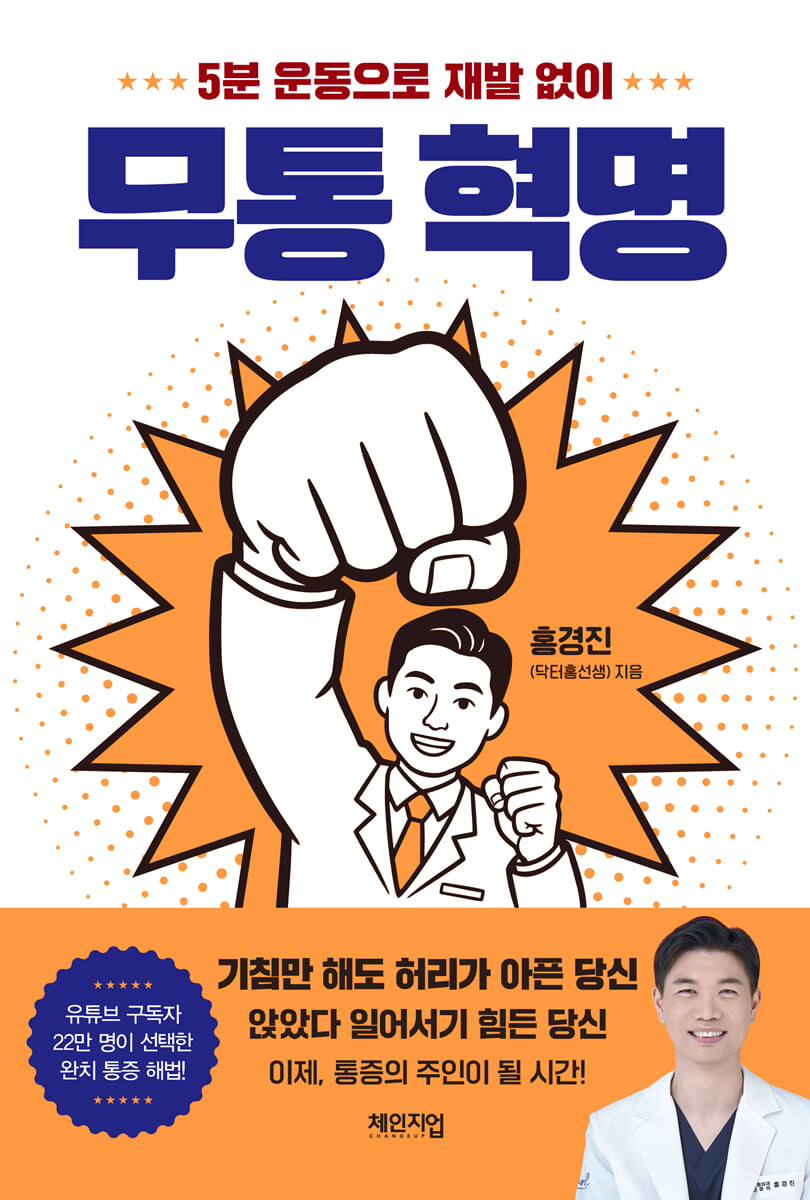
You, whose back hurts just from coughing,
You who have difficulty standing up after sitting down,
Now, it's time to become the master of your pain!
Pain is the result of incorrect movements and lifestyle habits that have accumulated over a long period of time.
In this book, Hong Kyung-jin, aka "Dr. Hong," an orthopedic surgeon with millions of views on YouTube, has proven a more realistic and sustainable way to deal with pain with his 220,000 subscribers.
It structurally dissects the reality of pain that many people repeatedly experience in areas such as the lower back, neck, shoulders, and knees, and presents specific practical methods for correcting incorrect posture and movement.
We have completed a practical guide that can be followed consistently outside of the hospital to relieve pain by organizing the three-step exercise principles to restore balance to the entire body, a five-minute exercise method per day, and lifestyle habits to prevent relapse.
Rather than relying solely on immediate effects like medication or procedures, the book is centered around understanding and adjusting the movements and habits necessary to maintain a comfortable state for your body.
Viewing pain as a "product of habit" offers new insights and reminds those weary of recurring pain that the path to recovery is closer than they think.
For readers who have been suffering from pain for a long time, we guide you step by step through the principles and practices necessary to create a body that heals itself.
You who have difficulty standing up after sitting down,
Now, it's time to become the master of your pain!
Pain is the result of incorrect movements and lifestyle habits that have accumulated over a long period of time.
In this book, Hong Kyung-jin, aka "Dr. Hong," an orthopedic surgeon with millions of views on YouTube, has proven a more realistic and sustainable way to deal with pain with his 220,000 subscribers.
It structurally dissects the reality of pain that many people repeatedly experience in areas such as the lower back, neck, shoulders, and knees, and presents specific practical methods for correcting incorrect posture and movement.
We have completed a practical guide that can be followed consistently outside of the hospital to relieve pain by organizing the three-step exercise principles to restore balance to the entire body, a five-minute exercise method per day, and lifestyle habits to prevent relapse.
Rather than relying solely on immediate effects like medication or procedures, the book is centered around understanding and adjusting the movements and habits necessary to maintain a comfortable state for your body.
Viewing pain as a "product of habit" offers new insights and reminds those weary of recurring pain that the path to recovery is closer than they think.
For readers who have been suffering from pain for a long time, we guide you step by step through the principles and practices necessary to create a body that heals itself.
- You can preview some of the book's contents.
Preview
index
prolog
Chapter 1.
All About Pain Management
Can I just follow the exercises shown on YouTube or TV?
Why do I get sick again even after taking medicine and getting shots?
Do I really need to get an MRI and then have surgery?
If it's an expensive injection, isn't it necessarily good?
I'm taking expensive nutritional supplements, so I'll feel better, right?
Could the cause of the pain be something in my daily life?
Chapter 2.
Decision to break bad habits
What are some bad postures and movements?
Isn't exercise good for your body?
What has the biggest impact on movement?
Can pain really be cured?
Chapter 3.
Exercises for Pain-Free Movement
If you look at the muscles, you can see the cause of the pain?
Stretching: Why should it be the start of your workout?
Why are stability muscles important?
What muscles should I develop to improve my movement?
Chapter 4.
What happens when your center of gravity collapses
Why are core muscles important?
Do I have forward head posture or forward head posture?
Do I have a herniated disc?
Are you saying that your headache that won't go away is because of your neck?
Why does my back hurt?
How should I manage my herniated disc?
Back Pain: Can I Live Without It Recurring?
Chapter 5.
Why do joints that we use every day often hurt?
Why do my shoulders keep getting stiff?
How do you manage frozen shoulder?
What are shoulder dislocation and arthritis?
How do I maintain elbow health?
What should I do if my wrists and fingers hurt?
Can you get arthritis in your fingers too?
Chapter 6.
Pelvic imbalance and body pain
How do you recognize hip problems?
What exercises are good for hip pain?
Why does the outside of my hip hurt?
How to balance your pelvis?
Is the sacroiliac joint the cause of pelvic pain?
What stretches are good for stenosis?
Chapter 7.
Why it hurts when you walk
Why do my knees hurt so easily?
Can osteoarthritis be cured?
Does a meniscus tear always require surgery?
I sprained my ankle once, why does it keep hurting?
You can also get arthritis in your ankles?
How do you care for your Achilles tendon?
My feet hurt. Is it plantar fasciitis?
Chapter 8.
Joint remodeling starting from everyday life
Do your daily habits shape your posture?
How do I create a habit of exercising consistently?
What foods should I eat to avoid getting sick?
Does stress increase or decrease pain?
Is this pain a 'danger signal' that I should stop exercising?
How should we approach pain?
Epilogue
References
Chapter 1.
All About Pain Management
Can I just follow the exercises shown on YouTube or TV?
Why do I get sick again even after taking medicine and getting shots?
Do I really need to get an MRI and then have surgery?
If it's an expensive injection, isn't it necessarily good?
I'm taking expensive nutritional supplements, so I'll feel better, right?
Could the cause of the pain be something in my daily life?
Chapter 2.
Decision to break bad habits
What are some bad postures and movements?
Isn't exercise good for your body?
What has the biggest impact on movement?
Can pain really be cured?
Chapter 3.
Exercises for Pain-Free Movement
If you look at the muscles, you can see the cause of the pain?
Stretching: Why should it be the start of your workout?
Why are stability muscles important?
What muscles should I develop to improve my movement?
Chapter 4.
What happens when your center of gravity collapses
Why are core muscles important?
Do I have forward head posture or forward head posture?
Do I have a herniated disc?
Are you saying that your headache that won't go away is because of your neck?
Why does my back hurt?
How should I manage my herniated disc?
Back Pain: Can I Live Without It Recurring?
Chapter 5.
Why do joints that we use every day often hurt?
Why do my shoulders keep getting stiff?
How do you manage frozen shoulder?
What are shoulder dislocation and arthritis?
How do I maintain elbow health?
What should I do if my wrists and fingers hurt?
Can you get arthritis in your fingers too?
Chapter 6.
Pelvic imbalance and body pain
How do you recognize hip problems?
What exercises are good for hip pain?
Why does the outside of my hip hurt?
How to balance your pelvis?
Is the sacroiliac joint the cause of pelvic pain?
What stretches are good for stenosis?
Chapter 7.
Why it hurts when you walk
Why do my knees hurt so easily?
Can osteoarthritis be cured?
Does a meniscus tear always require surgery?
I sprained my ankle once, why does it keep hurting?
You can also get arthritis in your ankles?
How do you care for your Achilles tendon?
My feet hurt. Is it plantar fasciitis?
Chapter 8.
Joint remodeling starting from everyday life
Do your daily habits shape your posture?
How do I create a habit of exercising consistently?
What foods should I eat to avoid getting sick?
Does stress increase or decrease pain?
Is this pain a 'danger signal' that I should stop exercising?
How should we approach pain?
Epilogue
References
Detailed image
.jpg)
Into the book
I wanted to pinpoint exactly what was causing the pain you were experiencing.
I wanted to help you move beyond the narrow perspective of only looking at the 'sore area' and gain a broader perspective that allows you to see 'our entire body'.
--- From the "Prologue"
Usually, hospitals administer injections to the inflamed area or use medication to reduce inflammation.
In fact, most symptoms improve with this treatment.
The problem comes next.
As the pain subsides, people return to work, exercise, and life as usual.
However, doing so will likely result in a recurrence of the pain.
--- p.18
Degenerative arthritis is not simply a disease caused by the wearing away of cartilage.
It is a disease in which the ligaments and muscles that support the joints become weak, making the joints unstable and resulting in damage to the cartilage.
So, to reduce pain and protect your joints, you must do stretching and strength training to strengthen the weakened surrounding muscles and ligaments.
--- p.28
Habits that people do without thinking, such as 'standing with one leg crossed' or 'crossing one leg', also put continuous pressure on one side, causing the pelvis to become distorted.
This causes the muscles to become unbalanced and tense, causing pain, which ultimately negatively affects the balance of the entire body.
Therefore, if there is an imbalance in the pelvis, exercises to restore balance are absolutely necessary.
--- p.163
I think many people fail to exercise consistently because they lack willpower.
But that's not always the case.
To understand the true reason, it is important to understand the structure of habits.
--- p.
226
Therefore, properly managing inflammation is very important for preventing joint pain and further maintaining health.
The key to inflammation management is to help the acute inflammatory response function normally and prevent chronic inflammatory conditions.
It is closely related to everyday factors such as diet, lifestyle, exercise, and stress management.
I wanted to help you move beyond the narrow perspective of only looking at the 'sore area' and gain a broader perspective that allows you to see 'our entire body'.
--- From the "Prologue"
Usually, hospitals administer injections to the inflamed area or use medication to reduce inflammation.
In fact, most symptoms improve with this treatment.
The problem comes next.
As the pain subsides, people return to work, exercise, and life as usual.
However, doing so will likely result in a recurrence of the pain.
--- p.18
Degenerative arthritis is not simply a disease caused by the wearing away of cartilage.
It is a disease in which the ligaments and muscles that support the joints become weak, making the joints unstable and resulting in damage to the cartilage.
So, to reduce pain and protect your joints, you must do stretching and strength training to strengthen the weakened surrounding muscles and ligaments.
--- p.28
Habits that people do without thinking, such as 'standing with one leg crossed' or 'crossing one leg', also put continuous pressure on one side, causing the pelvis to become distorted.
This causes the muscles to become unbalanced and tense, causing pain, which ultimately negatively affects the balance of the entire body.
Therefore, if there is an imbalance in the pelvis, exercises to restore balance are absolutely necessary.
--- p.163
I think many people fail to exercise consistently because they lack willpower.
But that's not always the case.
To understand the true reason, it is important to understand the structure of habits.
--- p.
226
Therefore, properly managing inflammation is very important for preventing joint pain and further maintaining health.
The key to inflammation management is to help the acute inflammatory response function normally and prevent chronic inflammatory conditions.
It is closely related to everyday factors such as diet, lifestyle, exercise, and stress management.
--- p.231
Publisher's Review
Pain is a result of habits, and recovery is also a result of habits.
Anyone can create a body that heals itself.
Most pain doesn't just appear one day.
Dr. Hong Kyung-jin, an orthopedic surgeon and YouTuber with millions of views, has repeatedly confirmed through his experience with countless patients that the root cause of pain is the accumulation of incorrect movement and lifestyle habits.
"Painless Revolution" is the result of pain management principles proven through extensive clinical experience and communication with the public, providing the most practical recovery guide anyone can follow in their daily lives.
The pain isn't just in the sore spot.
When the body's center of gravity collapses, when poor posture is repeated, and when compensatory movements become rigid, the pain becomes deeper and lasts longer.
To help readers understand these principles on their own, we've organized them into a step-by-step flow, from the three-step exercise principles that restore balance to the entire body, to the five-minute daily exercise method, to lifestyle habits that prevent relapse.
These are simple, practical methods that can be consistently practiced outside of the hospital.
In particular, this book emphasizes the key attitudes needed to eliminate pain.
When suffering from pain, you may expect quick relief and resort to hospital treatments like medication or injections. However, you must understand that the essence of recovery is the process of understanding and adjusting the movements and habits your body needs to maintain comfort.
Viewing pain as a "product of habit" empowers readers to understand and manage their bodies more deeply, and helps them realize that a pain-free life is not a distant goal.
A new standard in pain management that bridges the gap between medicine and everyday life.
Pain relief principles proven by 220,000 subscribers
This book is packed with everything pain patients actually need, from the questions asked daily in the orthopedic clinic, to the core advice we give patients first, to the reasons why incorrect exercises that are easy to follow can actually make pain worse, to the principles of movement that you absolutely must know to avoid getting hurt again.
Recovery is ultimately a process that the patient completes on his own.
If you start doing just one right thing today, those small changes will accumulate and lead to a pain-free daily life.
《The Painless Revolution》 is a book that goes beyond medical knowledge and provides readers weary of pain with practical tools to change their lives.
Pain caused by bad habits can be healed by good habits, rekindling the hope that anyone can create a body that heals itself.
Anyone can create a body that heals itself.
Most pain doesn't just appear one day.
Dr. Hong Kyung-jin, an orthopedic surgeon and YouTuber with millions of views, has repeatedly confirmed through his experience with countless patients that the root cause of pain is the accumulation of incorrect movement and lifestyle habits.
"Painless Revolution" is the result of pain management principles proven through extensive clinical experience and communication with the public, providing the most practical recovery guide anyone can follow in their daily lives.
The pain isn't just in the sore spot.
When the body's center of gravity collapses, when poor posture is repeated, and when compensatory movements become rigid, the pain becomes deeper and lasts longer.
To help readers understand these principles on their own, we've organized them into a step-by-step flow, from the three-step exercise principles that restore balance to the entire body, to the five-minute daily exercise method, to lifestyle habits that prevent relapse.
These are simple, practical methods that can be consistently practiced outside of the hospital.
In particular, this book emphasizes the key attitudes needed to eliminate pain.
When suffering from pain, you may expect quick relief and resort to hospital treatments like medication or injections. However, you must understand that the essence of recovery is the process of understanding and adjusting the movements and habits your body needs to maintain comfort.
Viewing pain as a "product of habit" empowers readers to understand and manage their bodies more deeply, and helps them realize that a pain-free life is not a distant goal.
A new standard in pain management that bridges the gap between medicine and everyday life.
Pain relief principles proven by 220,000 subscribers
This book is packed with everything pain patients actually need, from the questions asked daily in the orthopedic clinic, to the core advice we give patients first, to the reasons why incorrect exercises that are easy to follow can actually make pain worse, to the principles of movement that you absolutely must know to avoid getting hurt again.
Recovery is ultimately a process that the patient completes on his own.
If you start doing just one right thing today, those small changes will accumulate and lead to a pain-free daily life.
《The Painless Revolution》 is a book that goes beyond medical knowledge and provides readers weary of pain with practical tools to change their lives.
Pain caused by bad habits can be healed by good habits, rekindling the hope that anyone can create a body that heals itself.
GOODS SPECIFICS
- Date of issue: December 8, 2025
- Page count, weight, size: 256 pages | 454g | 152*225*16mm
- ISBN13: 9791191378856
- ISBN10: 1191378853
You may also like
카테고리
korean


korean

![GQ KOREA Mark (Monthly): December [2025]](http://librairie.coreenne.fr/cdn/shop/files/8ef265dbbfbf186523ed75ba7319009d.jpg?v=1765340328&width=3840)


