

winning body
 |
Description
Book Introduction
“Our body is one system!”
"My Body's 100-Year User Manual": A Lifetime Guide
"Doctor Who Educates! Lee Dong-hwan TV" Director Lee Dong-hwan shares how to become the true master of a "winning body."
A guide to our body's health, 'to use it wisely and sparingly', as our bodies wear out from use.
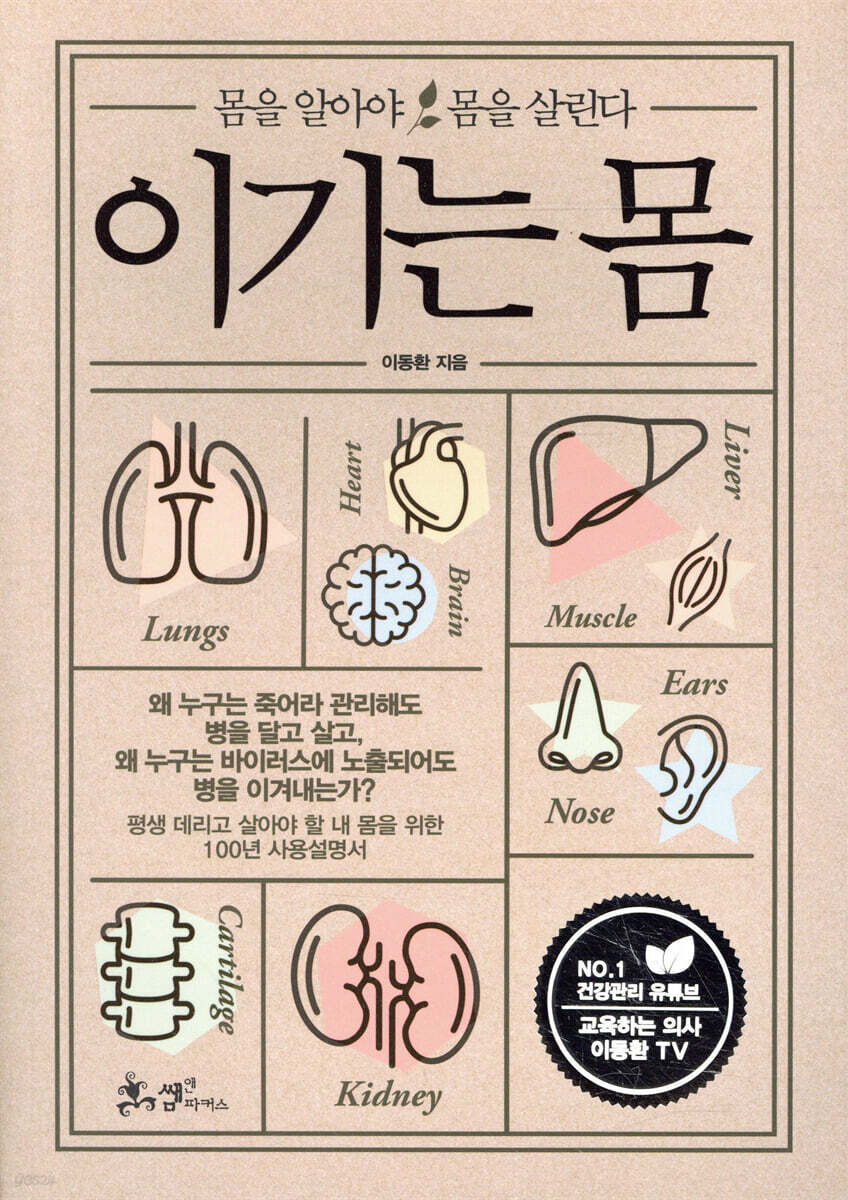
Dr. Lee Dong-hwan, a family medicine specialist well-known for his popular health care channel, "Doctor Who Educates! Lee Dong-hwan TV," has published a new book, "The Body That Wins."
Starting from the invisible microscopic world within our bodies, this book covers the operating principles of each major organ, related diseases, and everything related to eating, sleeping, breathing, and moving.
The body is a 'system' made up of various organs, bones, muscles, brain, etc. that form a network.
Pain occurs not when something is wrong with one part of the body, but when the relationship between these parts is not normal.
Simply put, if there is a problem with the intestines, the intestines should be examined first, but it should not be considered as a problem 'only' in the intestines.
When you have trouble breathing, you may think of a lung problem, but your lungs are never the only cause.
Because our bodies are not machines that can be replaced with replacement parts.
Just by properly understanding the organically functioning system called our 'body' and understanding its principles, we can protect ourselves from diseases and viruses.
You can become the true owner of a ‘winning body.’
The "Winning Body" starts here.
Let's use our bodies as 'knowingly' and 'savingly' as possible, as we will be using them for the next 50 years or more.
By properly understanding my body and noticing the signals it sends me.
This book contains ten thousand stories about how to create a 'body that can overcome' viruses, diseases, and aging.
"My Body's 100-Year User Manual": A Lifetime Guide
"Doctor Who Educates! Lee Dong-hwan TV" Director Lee Dong-hwan shares how to become the true master of a "winning body."
A guide to our body's health, 'to use it wisely and sparingly', as our bodies wear out from use.
Dr. Lee Dong-hwan, a family medicine specialist well-known for his popular health care channel, "Doctor Who Educates! Lee Dong-hwan TV," has published a new book, "The Body That Wins."
Starting from the invisible microscopic world within our bodies, this book covers the operating principles of each major organ, related diseases, and everything related to eating, sleeping, breathing, and moving.
The body is a 'system' made up of various organs, bones, muscles, brain, etc. that form a network.
Pain occurs not when something is wrong with one part of the body, but when the relationship between these parts is not normal.
Simply put, if there is a problem with the intestines, the intestines should be examined first, but it should not be considered as a problem 'only' in the intestines.
When you have trouble breathing, you may think of a lung problem, but your lungs are never the only cause.
Because our bodies are not machines that can be replaced with replacement parts.
Just by properly understanding the organically functioning system called our 'body' and understanding its principles, we can protect ourselves from diseases and viruses.
You can become the true owner of a ‘winning body.’
The "Winning Body" starts here.
Let's use our bodies as 'knowingly' and 'savingly' as possible, as we will be using them for the next 50 years or more.
By properly understanding my body and noticing the signals it sends me.
This book contains ten thousand stories about how to create a 'body that can overcome' viruses, diseases, and aging.
- You can preview some of the book's contents.
Preview
index
Prologue We don't know our bodies well, that's why we get sick _5
Part 1: The Body That Defeats Viruses
01 The immune system, the "shield" and "spear" that protects our bodies_19
The ability to distinguish between self and others, the immune system · The intestines, the largest immune organ in our body · NK cells and cancer cells · What happens when the immune system fails · Autoimmune diseases, flour makes them worse · A high glycemic index also increases the inflammatory response · Three ingredients that help balance immune cells · Cold sores, danger signals from the body · People who win against viruses, people who lose to viruses · Is lactic acid bacteria a toxin that causes sepsis?
02 The Microscopic World That Affects Health: Cells and Microinflammation_50
Why do we get more tired as we age? · Mitochondria, the boilers within our cells · Attacks from free radicals, the beginning of aging · Foods necessary for powerful antioxidant action · Even though we age the same, we age differently · Why microinflammation occurs without us knowing · How to prevent microinflammation before it breaks down · Homocysteine, another major culprit that clogs blood vessels · What they do at the 'Stool Bank' in Boston, USA · Knowing your gut bacteria can lead to longevity
03 Automated System of the Body Network, Hormones_82
Why insulin secretion affects health · Neither too little nor too much · Thyroid hormones are essential for sustaining life · Thyroid cancer is not non-cancer · The answer to postpartum wind lies in thyroid hormones · Nutrients that help the thyroid gland · Stress hormones protect our bodies · Steroids have two faces · Chronic fatigue is caused by the adrenal glands · How to improve adrenal function
Part 2 The Body that Conquers Disease
04 My Body's Air Purifier, Lungs_115
Moist mucous membranes protect the lungs. · Our attitude toward ultrafine dust. · Pneumonia, asthma, and pulmonary tuberculosis. · Shortness of breath: Is it pneumonia? · A thousand misconceptions about smoking and the lungs. · Don't be reassured by a single X-ray.
05 The Last Bastion for Detoxification, the Liver_132
How to Detox Your Liver · Managing Chronic Hepatitis Prevents Liver Cancer · Fatty Liver Can Happen Even Without Drinking a Drop of Alcohol · Ultrasound Test vs.
Blood test, which one is right?
06 The Beginning and End of Life, the Heart_144
Visible veins, palpable arteries · Why your heart suddenly pounds · Dangerous signals from chest pain · High blood pressure, the silent killer · Your blood pressure user manual: You can manage it yourself · Various problems associated with high blood pressure · Why early morning exercise is dangerous during the changing seasons · A simple way to diagnose heart disease
07 Our Body's Control Tower, the Brain_163
From instinct to memory, the brain does it all. Brain aging can't be prevented, but it can be slowed. Synapses shape our personality and destiny. Stroke: Remember FAST. Omega-3 slows Alzheimer's.
08 The Front Line of Diet: The Stomach and Esophagus_181
Chest pain could be reflux esophagitis. · How to easily distinguish between hyperacidity and hypoacidity. · Never trust stomach symptoms. · Why stomach cancer rates are particularly high in Korea. · Various stomach examination methods.
09 Good Sewage Treatment Plant, Chief and Director_197
Is the intestines external or internal to the body? · Colon polyps are the seeds of colon cancer. · The body will recover if we just save the intestines. · The '5R System' that detoxifies a weakened intestine. · The endoscopy results are normal, but why does my stomach hurt?
10 Basic Conditions for Longevity: Bones and Muscles_211
What we didn't know about bones and muscles · The fear of middle age, why holes form in bones · Sarcopenia, a disease that causes muscle wasting · What happens to blood vessels when muscles disappear · The appropriate amount of muscle to stay active even in old age · Muscle loss causes pain · How to diagnose turtle neck to prevent cervical disc herniation · Chronic back pain, is it lumbar disc herniation? · Frozen shoulder, an uncomfortable guest in middle age
11. The passages connecting the body to the outside world: eyes, ears, nose_235
Dry eye syndrome that reduces vision · Why does glaucoma occur? · Fatal diseases that can be contracted if you neglect eye exams · Tinnitus is not an incurable disease · If you frequently feel dizzy when the weather gets cold, suspect 'this' · Why men are more likely to be bald than women · Things to keep in mind when visiting a hair loss clinic
Part 3: The Body That Beats Aging
12 Eating Well and Drinking Properly, Diet_261
What's more important than eating breakfast? · How many meals should you eat a day? · The 'fasting stomach' that activates the cellular cleaners. · Intermittent fasting is necessary for health. · Is a vegetarian diet really good for your health? · There are ways to drink water healthily. · The truth about moderate drinking being good for your health. · Does black coffee prevent liver cancer? · People who shouldn't drink coffee. · Drinking it like this will ruin your stomach.
13 Disease-fighting support, nutritional supplements_298
How to Protect Yourself from 'Modern Malnutrition' · Too Many Supplements? Start with These · The Pitfalls of the Recommended Daily Intake: Is It Okay to Take Overlapping Ingredients? · I Take Too Many Medications, Should I Also Take Supplements? · Why Patients Should Be More Diligent About Supplements · Trending Supplements: Krill Oil and Omega-3 Fatty Acids
14 Minimum Conditions for Vitality: Sleep and Exercise_314
Why you're tired even after getting enough sleep · Sleep habits that cause vascular disease · How to fall asleep in just 2 minutes: The jellyfish sleep method · The most appropriate exercise intensity for me · How much protein should I eat to increase muscle mass?
15 The Mysterious Defense Wall Created by the Mind: Stress_332
How stress infuses life · The difference between 'relieving' stress and 'forgetting' it · Positive thinking changes the body's hormones · The real reason why optimistic people are less likely to develop vascular disease · Our emotions are being damaged · Three nutrients lost when we are stressed
Epilogue: The World's Only Health Book, Stronger Than a Thousand Horses_348
Part 1: The Body That Defeats Viruses
01 The immune system, the "shield" and "spear" that protects our bodies_19
The ability to distinguish between self and others, the immune system · The intestines, the largest immune organ in our body · NK cells and cancer cells · What happens when the immune system fails · Autoimmune diseases, flour makes them worse · A high glycemic index also increases the inflammatory response · Three ingredients that help balance immune cells · Cold sores, danger signals from the body · People who win against viruses, people who lose to viruses · Is lactic acid bacteria a toxin that causes sepsis?
02 The Microscopic World That Affects Health: Cells and Microinflammation_50
Why do we get more tired as we age? · Mitochondria, the boilers within our cells · Attacks from free radicals, the beginning of aging · Foods necessary for powerful antioxidant action · Even though we age the same, we age differently · Why microinflammation occurs without us knowing · How to prevent microinflammation before it breaks down · Homocysteine, another major culprit that clogs blood vessels · What they do at the 'Stool Bank' in Boston, USA · Knowing your gut bacteria can lead to longevity
03 Automated System of the Body Network, Hormones_82
Why insulin secretion affects health · Neither too little nor too much · Thyroid hormones are essential for sustaining life · Thyroid cancer is not non-cancer · The answer to postpartum wind lies in thyroid hormones · Nutrients that help the thyroid gland · Stress hormones protect our bodies · Steroids have two faces · Chronic fatigue is caused by the adrenal glands · How to improve adrenal function
Part 2 The Body that Conquers Disease
04 My Body's Air Purifier, Lungs_115
Moist mucous membranes protect the lungs. · Our attitude toward ultrafine dust. · Pneumonia, asthma, and pulmonary tuberculosis. · Shortness of breath: Is it pneumonia? · A thousand misconceptions about smoking and the lungs. · Don't be reassured by a single X-ray.
05 The Last Bastion for Detoxification, the Liver_132
How to Detox Your Liver · Managing Chronic Hepatitis Prevents Liver Cancer · Fatty Liver Can Happen Even Without Drinking a Drop of Alcohol · Ultrasound Test vs.
Blood test, which one is right?
06 The Beginning and End of Life, the Heart_144
Visible veins, palpable arteries · Why your heart suddenly pounds · Dangerous signals from chest pain · High blood pressure, the silent killer · Your blood pressure user manual: You can manage it yourself · Various problems associated with high blood pressure · Why early morning exercise is dangerous during the changing seasons · A simple way to diagnose heart disease
07 Our Body's Control Tower, the Brain_163
From instinct to memory, the brain does it all. Brain aging can't be prevented, but it can be slowed. Synapses shape our personality and destiny. Stroke: Remember FAST. Omega-3 slows Alzheimer's.
08 The Front Line of Diet: The Stomach and Esophagus_181
Chest pain could be reflux esophagitis. · How to easily distinguish between hyperacidity and hypoacidity. · Never trust stomach symptoms. · Why stomach cancer rates are particularly high in Korea. · Various stomach examination methods.
09 Good Sewage Treatment Plant, Chief and Director_197
Is the intestines external or internal to the body? · Colon polyps are the seeds of colon cancer. · The body will recover if we just save the intestines. · The '5R System' that detoxifies a weakened intestine. · The endoscopy results are normal, but why does my stomach hurt?
10 Basic Conditions for Longevity: Bones and Muscles_211
What we didn't know about bones and muscles · The fear of middle age, why holes form in bones · Sarcopenia, a disease that causes muscle wasting · What happens to blood vessels when muscles disappear · The appropriate amount of muscle to stay active even in old age · Muscle loss causes pain · How to diagnose turtle neck to prevent cervical disc herniation · Chronic back pain, is it lumbar disc herniation? · Frozen shoulder, an uncomfortable guest in middle age
11. The passages connecting the body to the outside world: eyes, ears, nose_235
Dry eye syndrome that reduces vision · Why does glaucoma occur? · Fatal diseases that can be contracted if you neglect eye exams · Tinnitus is not an incurable disease · If you frequently feel dizzy when the weather gets cold, suspect 'this' · Why men are more likely to be bald than women · Things to keep in mind when visiting a hair loss clinic
Part 3: The Body That Beats Aging
12 Eating Well and Drinking Properly, Diet_261
What's more important than eating breakfast? · How many meals should you eat a day? · The 'fasting stomach' that activates the cellular cleaners. · Intermittent fasting is necessary for health. · Is a vegetarian diet really good for your health? · There are ways to drink water healthily. · The truth about moderate drinking being good for your health. · Does black coffee prevent liver cancer? · People who shouldn't drink coffee. · Drinking it like this will ruin your stomach.
13 Disease-fighting support, nutritional supplements_298
How to Protect Yourself from 'Modern Malnutrition' · Too Many Supplements? Start with These · The Pitfalls of the Recommended Daily Intake: Is It Okay to Take Overlapping Ingredients? · I Take Too Many Medications, Should I Also Take Supplements? · Why Patients Should Be More Diligent About Supplements · Trending Supplements: Krill Oil and Omega-3 Fatty Acids
14 Minimum Conditions for Vitality: Sleep and Exercise_314
Why you're tired even after getting enough sleep · Sleep habits that cause vascular disease · How to fall asleep in just 2 minutes: The jellyfish sleep method · The most appropriate exercise intensity for me · How much protein should I eat to increase muscle mass?
15 The Mysterious Defense Wall Created by the Mind: Stress_332
How stress infuses life · The difference between 'relieving' stress and 'forgetting' it · Positive thinking changes the body's hormones · The real reason why optimistic people are less likely to develop vascular disease · Our emotions are being damaged · Three nutrients lost when we are stressed
Epilogue: The World's Only Health Book, Stronger Than a Thousand Horses_348
Detailed image
.jpg)
Into the book
As we age, we begin to experience more and more pain in various places.
When I was young, there was nothing wrong with me, but when I turned 40 or 50, I often wondered if there was any place that didn't hurt.
Blood sugar and cholesterol levels start to deviate from the normal range, and the body always feels heavy and tired, but sleep is difficult.
So, I stock up on nutritional supplements that are said to be good and take them consistently.
Sometimes I believe TV programs and try taking different supplements.
But the problem is that it only makes you feel better for a little while and doesn't really make you feel better.
What could be the reason? Was it because the supplements weren't effective? Or because I wasn't exercising? Or because I wasn't getting enough sleep? Or because work or my children were giving me headaches? The answer is "all of them."
And there's more.
The fact is that we don't know our bodies very well.
Because we do not properly understand the functions of our body, we do not know what we need, and we do not pay attention to the rescue calls our body sends us, which leads to illness.
---From "We don't know our bodies well, that's why they hurt"
Why does microinflammation occur? When our body's cells are injured or damaged, they need to clear away dead cells.
This process is a small inflammatory reaction that inevitably occurs.
Therefore, the more frequently cells are damaged, the more likely microinflammation occurs.
(…) Vascular diseases are also ultimately related to microinflammation.
It is known that high levels of bad cholesterol are associated with increased risk of vascular disease.
However, cholesterol itself does not block blood vessels.
Pure cholesterol circulates through the blood vessels and is used as a raw material for various hormones.
The problem starts when free radicals oxidize cholesterol.
(That free radical again!) Oxidized cholesterol gets deposited under the blood vessel walls, and that's where micro-inflammatory reactions begin.
This inflammatory response does not cause pain, swelling, or fever like the typical inflammation we know.
Inflammation begins to develop beneath the blood vessel wall without any symptoms, eventually causing small tears in the blood vessel wall.
To heal the wound, platelets stick to the blood vessel walls and form a blood clot, which ultimately causes 'atherosclerosis', which hardens the blood vessels.
---From "The Microscopic World That Affects Health: Cells and Microinflammation"
Symptoms that usually appear when you have adrenal fatigue are as follows:
It's very difficult to wake up in the morning.
Of course, waking up in the morning is difficult for anyone, especially if you tend to sleep in a lot.
However, even people who simply sleep in the morning will feel alert and physically awake within about 30 minutes to an hour once they get up and move around.
However, in the case of adrenal fatigue, you feel like you are not awake and your body feels heavy.
This is because, 30 minutes after waking up in the morning, the adrenal glands, which should normally secrete cortisol, have weakened their function.
Also, if you have adrenal fatigue, your body always feels heavy.
If you delay your meal even a little, you will experience severe hunger and hypoglycemia.
When you sit down and stand up, your blood pressure suddenly drops, causing you to feel dizzy and have blackouts. This also worsens the symptoms of orthostatic hypotension.
As motivation for everything decreases, it is easy to become depressed, and in the case of women, premenstrual syndrome becomes more severe, they become sensitive, and they become easily angry.
Even though I sleep, I don't feel like I've slept well and I'm tired from the morning, so I have to drink morning coffee and get through the morning with the help of caffeine.
After lunch, I feel more tired and need another cup of coffee to get through the afternoon.
Then, around 6 PM when I get off work, I feel a brief surge of energy and a boost of vitality, but after dinner, I become tired again.
---From "The Body Network's Automatic System, Hormones"
In the United States, there is a campaign called 'FAST', which is an abbreviation for these symptoms, to help detect strokes quickly.
F is the first letter of face, and it checks the condition of the facial muscles when you say “Smile like this.”
A is the first letter of arms.
“Raise your arms,” he says, checking to see if your arms and legs feel weak.
S checks the pronunciation status by trying to have a conversation with the first letter of speech.
The last T stands for 'time to act,' meaning if you suspect any of these symptoms, go to the emergency room immediately.
The reason why we are even using abbreviations for this campaign is because statistics show that half of the cases where people have these symptoms do not recognize that they are early symptoms of a stroke.
These symptoms can come and go, making it more difficult to diagnose on your own.
According to statistics, two out of three people who visit the hospital for a stroke do so at the behest of someone other than themselves.
Therefore, it is very important to have people around you check for symptoms.
---From "The Brain, Our Body's Control Tower"
In relation to fasting, there is a concept called 'autophagy' that is unfamiliar but essential to know.
Autophagy is the process by which cells break down components or organelles that are no longer needed and recycle them as energy sources.
It is a combination of the Greek words 'auto' meaning 'self' and 'phagy' meaning 'predation', and means 'eating oneself'.
That is, the protein waste floating around in the cells is recycled back into an energy source.
It is thanks to autophagy that our cells can produce energy to some extent even when the supply of nutrients is cut off during fasting.
Although research on this autophagy process began a long time ago, the person who elucidated the precise autophagy process of autophagy was Professor Yoshinori Ohsumi of Japan.
This is a well-proven theory, as the 2016 Nobel Prize in Physiology or Medicine was awarded for this topic.
Autophagy, which acts as a cellular cleaner, is constantly occurring in our bodies.
Our bodies constantly break down damaged and aged proteins and organelles to maintain health.
And a certain amount is recycled elsewhere.
In particular, it normally occurs at a very low level to maintain homeostasis in our body, but it becomes more active in stressful situations.
---From "Eating well and drinking properly, self-discipline"
If you take several nutritional supplements, there may be cases where the ingredients in the multivitamin overlap with those in the supplement, such as magnesium or vitamin B, that you take separately.
Is this okay? In fact, many people wonder about this overlapping nutritional profile.
What you probably know is the 'Recommended Daily Allowance (RDA)'.
Because we are so obsessed with the recommended intake, we often think that there is a problem if we exceed the recommended intake.
However, the opinion of the nutritionists who determined this recommended amount is that you must eat 'at least' this much to avoid deficiency.
Simply put, it is the minimum amount that does not cause deficiency.
There is a separate recommended amount for optimizing cell function.
This is the 'adequate intake amount (ODA)'.
So there is a huge difference between RDA and ODA in nutrient intake.
For example, the RDA for vitamin B1 is about 1 mg, but the ODA is about 50 to 100 mg.
Vitamin B1 is said to be safe to consume in large quantities, and is actually a dose that helps maintain proper cell function.
When I was young, there was nothing wrong with me, but when I turned 40 or 50, I often wondered if there was any place that didn't hurt.
Blood sugar and cholesterol levels start to deviate from the normal range, and the body always feels heavy and tired, but sleep is difficult.
So, I stock up on nutritional supplements that are said to be good and take them consistently.
Sometimes I believe TV programs and try taking different supplements.
But the problem is that it only makes you feel better for a little while and doesn't really make you feel better.
What could be the reason? Was it because the supplements weren't effective? Or because I wasn't exercising? Or because I wasn't getting enough sleep? Or because work or my children were giving me headaches? The answer is "all of them."
And there's more.
The fact is that we don't know our bodies very well.
Because we do not properly understand the functions of our body, we do not know what we need, and we do not pay attention to the rescue calls our body sends us, which leads to illness.
---From "We don't know our bodies well, that's why they hurt"
Why does microinflammation occur? When our body's cells are injured or damaged, they need to clear away dead cells.
This process is a small inflammatory reaction that inevitably occurs.
Therefore, the more frequently cells are damaged, the more likely microinflammation occurs.
(…) Vascular diseases are also ultimately related to microinflammation.
It is known that high levels of bad cholesterol are associated with increased risk of vascular disease.
However, cholesterol itself does not block blood vessels.
Pure cholesterol circulates through the blood vessels and is used as a raw material for various hormones.
The problem starts when free radicals oxidize cholesterol.
(That free radical again!) Oxidized cholesterol gets deposited under the blood vessel walls, and that's where micro-inflammatory reactions begin.
This inflammatory response does not cause pain, swelling, or fever like the typical inflammation we know.
Inflammation begins to develop beneath the blood vessel wall without any symptoms, eventually causing small tears in the blood vessel wall.
To heal the wound, platelets stick to the blood vessel walls and form a blood clot, which ultimately causes 'atherosclerosis', which hardens the blood vessels.
---From "The Microscopic World That Affects Health: Cells and Microinflammation"
Symptoms that usually appear when you have adrenal fatigue are as follows:
It's very difficult to wake up in the morning.
Of course, waking up in the morning is difficult for anyone, especially if you tend to sleep in a lot.
However, even people who simply sleep in the morning will feel alert and physically awake within about 30 minutes to an hour once they get up and move around.
However, in the case of adrenal fatigue, you feel like you are not awake and your body feels heavy.
This is because, 30 minutes after waking up in the morning, the adrenal glands, which should normally secrete cortisol, have weakened their function.
Also, if you have adrenal fatigue, your body always feels heavy.
If you delay your meal even a little, you will experience severe hunger and hypoglycemia.
When you sit down and stand up, your blood pressure suddenly drops, causing you to feel dizzy and have blackouts. This also worsens the symptoms of orthostatic hypotension.
As motivation for everything decreases, it is easy to become depressed, and in the case of women, premenstrual syndrome becomes more severe, they become sensitive, and they become easily angry.
Even though I sleep, I don't feel like I've slept well and I'm tired from the morning, so I have to drink morning coffee and get through the morning with the help of caffeine.
After lunch, I feel more tired and need another cup of coffee to get through the afternoon.
Then, around 6 PM when I get off work, I feel a brief surge of energy and a boost of vitality, but after dinner, I become tired again.
---From "The Body Network's Automatic System, Hormones"
In the United States, there is a campaign called 'FAST', which is an abbreviation for these symptoms, to help detect strokes quickly.
F is the first letter of face, and it checks the condition of the facial muscles when you say “Smile like this.”
A is the first letter of arms.
“Raise your arms,” he says, checking to see if your arms and legs feel weak.
S checks the pronunciation status by trying to have a conversation with the first letter of speech.
The last T stands for 'time to act,' meaning if you suspect any of these symptoms, go to the emergency room immediately.
The reason why we are even using abbreviations for this campaign is because statistics show that half of the cases where people have these symptoms do not recognize that they are early symptoms of a stroke.
These symptoms can come and go, making it more difficult to diagnose on your own.
According to statistics, two out of three people who visit the hospital for a stroke do so at the behest of someone other than themselves.
Therefore, it is very important to have people around you check for symptoms.
---From "The Brain, Our Body's Control Tower"
In relation to fasting, there is a concept called 'autophagy' that is unfamiliar but essential to know.
Autophagy is the process by which cells break down components or organelles that are no longer needed and recycle them as energy sources.
It is a combination of the Greek words 'auto' meaning 'self' and 'phagy' meaning 'predation', and means 'eating oneself'.
That is, the protein waste floating around in the cells is recycled back into an energy source.
It is thanks to autophagy that our cells can produce energy to some extent even when the supply of nutrients is cut off during fasting.
Although research on this autophagy process began a long time ago, the person who elucidated the precise autophagy process of autophagy was Professor Yoshinori Ohsumi of Japan.
This is a well-proven theory, as the 2016 Nobel Prize in Physiology or Medicine was awarded for this topic.
Autophagy, which acts as a cellular cleaner, is constantly occurring in our bodies.
Our bodies constantly break down damaged and aged proteins and organelles to maintain health.
And a certain amount is recycled elsewhere.
In particular, it normally occurs at a very low level to maintain homeostasis in our body, but it becomes more active in stressful situations.
---From "Eating well and drinking properly, self-discipline"
If you take several nutritional supplements, there may be cases where the ingredients in the multivitamin overlap with those in the supplement, such as magnesium or vitamin B, that you take separately.
Is this okay? In fact, many people wonder about this overlapping nutritional profile.
What you probably know is the 'Recommended Daily Allowance (RDA)'.
Because we are so obsessed with the recommended intake, we often think that there is a problem if we exceed the recommended intake.
However, the opinion of the nutritionists who determined this recommended amount is that you must eat 'at least' this much to avoid deficiency.
Simply put, it is the minimum amount that does not cause deficiency.
There is a separate recommended amount for optimizing cell function.
This is the 'adequate intake amount (ODA)'.
So there is a huge difference between RDA and ODA in nutrient intake.
For example, the RDA for vitamin B1 is about 1 mg, but the ODA is about 50 to 100 mg.
Vitamin B1 is said to be safe to consume in large quantities, and is actually a dose that helps maintain proper cell function.
---From "Supporters to Prevent Disease, Nutrients"
Publisher's Review
We don't know our bodies well
That's why it hurts
My stamina is not what it used to be, and my body always feels heavy and tired.
When we feel these "negative changes" in our bodies, what actions do we take? Perhaps we'll seek out health foods that are supposedly good for our bodies or try a new type of exercise.
These things only provide temporary comfort, but fundamentally, they do not improve the physical condition much.
Why is that?
We don't know our bodies very well.
Because we don't know much, we don't know what we need, and we can't hear the signals our body sends, which makes us sick.
Our body is a network system made up of numerous organs, bones, muscles, and brain.
Pain occurs not when something is wrong with one part of the body, but when the relationship between these parts is not normal.
Because we don't know our bodies well, we try to get a health indulgence by taking 'one nutritional supplement' or 'exercising once or twice a week.'
Without even knowing what the body really needs.
Through this book, Director Lee Dong-hwan wanted to suggest ways to properly understand and use our bodies.
This is so that the countless 'normal patients(?)' of modern society, who live with bodies that are not disease-free but not completely healthy, can properly understand their bodies that they will have to use for the next 50 years or more, and use them as sparingly as possible.
From viruses, diseases and aging
winning body
Director Lee Dong-hwan is the 'first generation of functional medicine in Korea.'
'Functional medicine' is a discipline that seeks to restore the body's own healing ability by finding the fundamental cause and mechanism of the disease rather than simply suppressing the symptoms of the disease itself.
Simply put, it means viewing our bodies as a whole as a system, rather than viewing each part as an individual part.
Since the early 2000s, when functional medicine was not well known in Korea, Director Lee Dong-hwan has been researching it and applying it to domestic treatment.
This book also says, 'Our body is one system.'
Although each part of the body has a different function, it ultimately works together toward the common goal of a 'healthy body', and is not simply a 'part' that exists separately.
That is why you cannot change them one by one, and focusing on just one area does not make your entire body healthy.
This book, consisting of three parts, starts from the invisible microscopic world of the body and covers major organs such as the brain, heart, lungs, and liver, as well as the daily life of eating, sleeping, breathing, and moving.
Just as we start from a small dot and take in the whole picture at a glance, the view that is 'zoomed in' on a small cell gradually 'zooms out' and illuminates the overall flow of our body.
Part 1 covers 'immunity', which is a hot topic and essential knowledge in the field of health management.
It outlines common sense that is generally known but difficult to define clearly, such as how immunity defends our bodies, what causes immunity to be strong or weak, and what differences exist between people who show different immune responses to viruses.
In addition, we talk about 'cells and micro-inflammation' and 'hormones', which are invisible but are the key to the body's energy, aging, metabolism, etc.
It's like looking through a microscope at the various aspects of the 'microscopic world' inside the body that we usually ignore.
Part 2 takes a look at each of the major organs in our body.
Lungs, liver, heart, brain, and digestive system, bones, muscles… .
It also contains the operating principles of major organs, diseases that frequently occur in each organ, and self-diagnosis methods that can help you recognize the warning signs and signals sent by the body.
Part 3 talks about how to eat and drink well, how to take 'nutritional supplements' that protect our bodies from modern-day malnutrition, the pros and cons of nutritional supplements that many people wonder about, and some truths about 'sleep' and 'exercise' that are essential to life.
Here we also add the effects of 'stress' on our bodies and how our bodies should deal with stress.
Stronger than a thousand troops,
The world's only health book
There are many health books in the world.
If you don't know, you'll get sick.
Health is not something that can be achieved naturally; it requires physical, emotional, and intellectual effort and study, so keeping a health book close by is an excellent attitude.
Of course, if the problem is that you know but can't put it into practice, there is a way.
Knowing more easily and more accurately.
The more you know, the more you see, and the more you 'easily' know, the more you put into practice.
Because cognition and learning that are acquired easily and accurately become beliefs, and those beliefs can lead to practice.
In this very process, 『The Winning Body』 will become a well-trodden path to practice.
If you've read this book once, I hope you'll keep it by your side and read it whenever you need.
You can also open the book to a section you want to delve into more deeply and write down any new information you come across outside of the book on a memo pad.
It would be a good idea to index the relevant parts based on your current physical condition and emphasize the parts you need to be familiar with.
So that you can look it up and take a look at it anytime.
This book is the world's only health book, more reliable than a thousand troops and ten thousand horses, and will lead us to become the true owners of a "body that wins."
That's why it hurts
My stamina is not what it used to be, and my body always feels heavy and tired.
When we feel these "negative changes" in our bodies, what actions do we take? Perhaps we'll seek out health foods that are supposedly good for our bodies or try a new type of exercise.
These things only provide temporary comfort, but fundamentally, they do not improve the physical condition much.
Why is that?
We don't know our bodies very well.
Because we don't know much, we don't know what we need, and we can't hear the signals our body sends, which makes us sick.
Our body is a network system made up of numerous organs, bones, muscles, and brain.
Pain occurs not when something is wrong with one part of the body, but when the relationship between these parts is not normal.
Because we don't know our bodies well, we try to get a health indulgence by taking 'one nutritional supplement' or 'exercising once or twice a week.'
Without even knowing what the body really needs.
Through this book, Director Lee Dong-hwan wanted to suggest ways to properly understand and use our bodies.
This is so that the countless 'normal patients(?)' of modern society, who live with bodies that are not disease-free but not completely healthy, can properly understand their bodies that they will have to use for the next 50 years or more, and use them as sparingly as possible.
From viruses, diseases and aging
winning body
Director Lee Dong-hwan is the 'first generation of functional medicine in Korea.'
'Functional medicine' is a discipline that seeks to restore the body's own healing ability by finding the fundamental cause and mechanism of the disease rather than simply suppressing the symptoms of the disease itself.
Simply put, it means viewing our bodies as a whole as a system, rather than viewing each part as an individual part.
Since the early 2000s, when functional medicine was not well known in Korea, Director Lee Dong-hwan has been researching it and applying it to domestic treatment.
This book also says, 'Our body is one system.'
Although each part of the body has a different function, it ultimately works together toward the common goal of a 'healthy body', and is not simply a 'part' that exists separately.
That is why you cannot change them one by one, and focusing on just one area does not make your entire body healthy.
This book, consisting of three parts, starts from the invisible microscopic world of the body and covers major organs such as the brain, heart, lungs, and liver, as well as the daily life of eating, sleeping, breathing, and moving.
Just as we start from a small dot and take in the whole picture at a glance, the view that is 'zoomed in' on a small cell gradually 'zooms out' and illuminates the overall flow of our body.
Part 1 covers 'immunity', which is a hot topic and essential knowledge in the field of health management.
It outlines common sense that is generally known but difficult to define clearly, such as how immunity defends our bodies, what causes immunity to be strong or weak, and what differences exist between people who show different immune responses to viruses.
In addition, we talk about 'cells and micro-inflammation' and 'hormones', which are invisible but are the key to the body's energy, aging, metabolism, etc.
It's like looking through a microscope at the various aspects of the 'microscopic world' inside the body that we usually ignore.
Part 2 takes a look at each of the major organs in our body.
Lungs, liver, heart, brain, and digestive system, bones, muscles… .
It also contains the operating principles of major organs, diseases that frequently occur in each organ, and self-diagnosis methods that can help you recognize the warning signs and signals sent by the body.
Part 3 talks about how to eat and drink well, how to take 'nutritional supplements' that protect our bodies from modern-day malnutrition, the pros and cons of nutritional supplements that many people wonder about, and some truths about 'sleep' and 'exercise' that are essential to life.
Here we also add the effects of 'stress' on our bodies and how our bodies should deal with stress.
Stronger than a thousand troops,
The world's only health book
There are many health books in the world.
If you don't know, you'll get sick.
Health is not something that can be achieved naturally; it requires physical, emotional, and intellectual effort and study, so keeping a health book close by is an excellent attitude.
Of course, if the problem is that you know but can't put it into practice, there is a way.
Knowing more easily and more accurately.
The more you know, the more you see, and the more you 'easily' know, the more you put into practice.
Because cognition and learning that are acquired easily and accurately become beliefs, and those beliefs can lead to practice.
In this very process, 『The Winning Body』 will become a well-trodden path to practice.
If you've read this book once, I hope you'll keep it by your side and read it whenever you need.
You can also open the book to a section you want to delve into more deeply and write down any new information you come across outside of the book on a memo pad.
It would be a good idea to index the relevant parts based on your current physical condition and emphasize the parts you need to be familiar with.
So that you can look it up and take a look at it anytime.
This book is the world's only health book, more reliable than a thousand troops and ten thousand horses, and will lead us to become the true owners of a "body that wins."
GOODS SPECIFICS
- Date of issue: May 15, 2020
- Page count, weight, size: 352 pages | 554g | 148*210*21mm
- ISBN13: 9791165341077
- ISBN10: 1165341077
You may also like
카테고리
korean


korean

![GQ KOREA Mark (Monthly): December [2025]](http://librairie.coreenne.fr/cdn/shop/files/8ef265dbbfbf186523ed75ba7319009d.jpg?v=1765340328&width=3840)


