![매거진 B (월간) : 7월 영문판 [2018년]](http://librairie.coreenne.fr/cdn/shop/files/bbcb4320f2cc28f311cef3fba9a11f71.jpg?v=1765405405&width=3840)

매거진 B (월간) : 7월 영문판 [2018년]
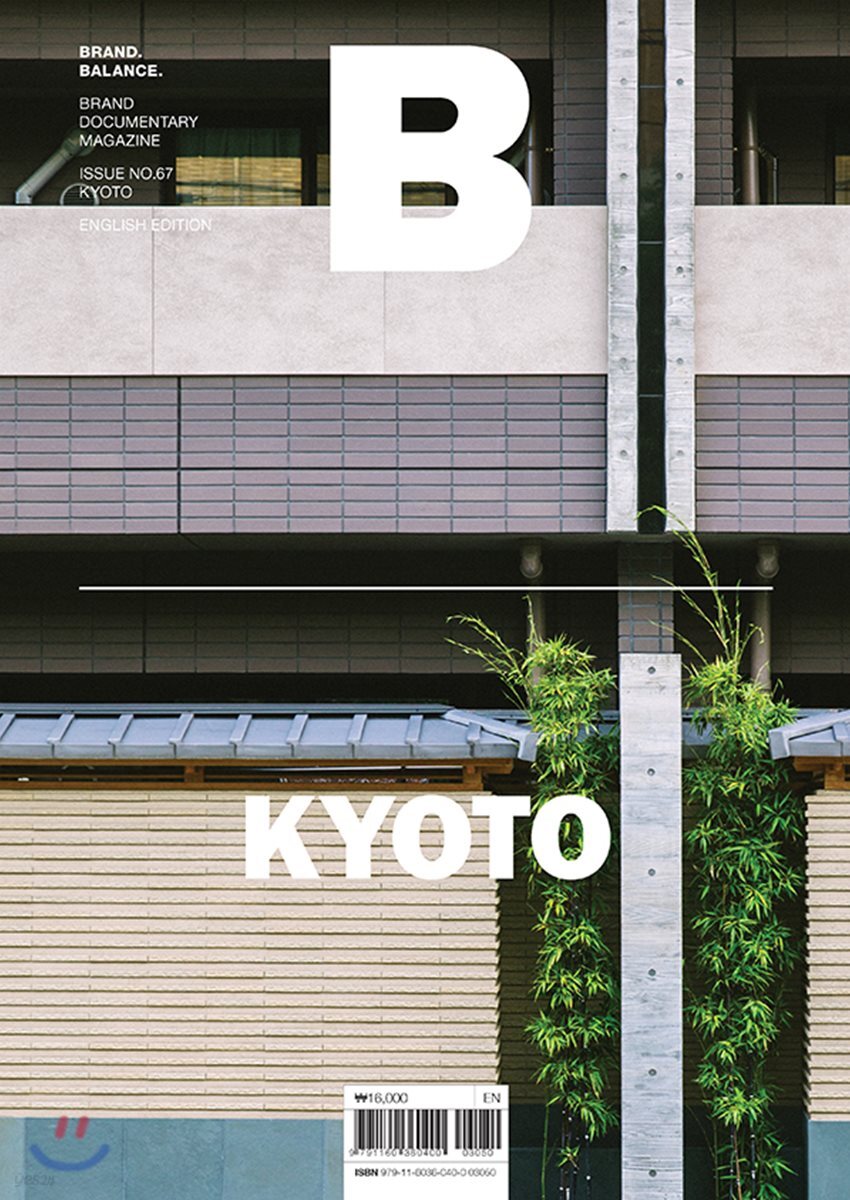 |
Description
목차
02 Intro
09 Editor’s Letter
12 Impression
Kyoto seen through its scenery
18 Observers
Firsthand accounts on the beauty of Kyoto
22 Collected
Objects reminiscent of Kyoto
26 Overview
Sociocultural keywords and statistics that give a glimpse into the many sides of Kyoto
36 At Dawn
Waking up in Suiran, a Luxury Collection Hotel
42 Exploration
Walking courses in different areas that offer a taste of Kyoto
48 Coffee Culture
Kyoto’s cafes capture the ideal urban lifestyle
54 Dining Scene
Food industry experts describe the Kyoto dining culture
66 Local Tours
Traditional markets and bars encountered on local tours
72 Objects
Meaningful souvenirs picked up in Kyoto
74 Community
Kyoto’s tradition and originality found in communities that carry on family legacies
88 New Wave
New potential seen through the creators and innovators pushing local boundaries
96 Art Platform
Kyotographie celebrates Kyoto’s openness and respect for art
100 At Dusk
The Four Seasons Hotel Kyoto with a romantic nighttime garden
104 Understated
Colors found in Kyoto
112 Settlers
People from diverse origins speak about their lives in Kyoto
116 Harmonized
Global brands that embrace Kyoto’s unique sensibilities
122 Where to Go
Places to visit in Kyoto listed by different categories
128 References
Books with comprehensive accounts on Kyoto
133 Outro
09 Editor’s Letter
12 Impression
Kyoto seen through its scenery
18 Observers
Firsthand accounts on the beauty of Kyoto
22 Collected
Objects reminiscent of Kyoto
26 Overview
Sociocultural keywords and statistics that give a glimpse into the many sides of Kyoto
36 At Dawn
Waking up in Suiran, a Luxury Collection Hotel
42 Exploration
Walking courses in different areas that offer a taste of Kyoto
48 Coffee Culture
Kyoto’s cafes capture the ideal urban lifestyle
54 Dining Scene
Food industry experts describe the Kyoto dining culture
66 Local Tours
Traditional markets and bars encountered on local tours
72 Objects
Meaningful souvenirs picked up in Kyoto
74 Community
Kyoto’s tradition and originality found in communities that carry on family legacies
88 New Wave
New potential seen through the creators and innovators pushing local boundaries
96 Art Platform
Kyotographie celebrates Kyoto’s openness and respect for art
100 At Dusk
The Four Seasons Hotel Kyoto with a romantic nighttime garden
104 Understated
Colors found in Kyoto
112 Settlers
People from diverse origins speak about their lives in Kyoto
116 Harmonized
Global brands that embrace Kyoto’s unique sensibilities
122 Where to Go
Places to visit in Kyoto listed by different categories
128 References
Books with comprehensive accounts on Kyoto
133 Outro
상세 이미지

출판사 리뷰
About the Publication
Magazine B is an ad-free monthly publication that dedicates each issue to one well-balanced brand unearthed from around the globe.
The magazine introduces the brand’s hidden stories, as well as its sensibility and culture, and is an easy but also serious read for anyone with an interest in brands.
About the Issue
Welcome to the 67th edition of B.
Around this time of the year, spring shifts into summer, and last year it was at this time when we released our Portland issue.
And this year, we focus on another?city, Kyoto.
It’s the second Asian city we’ve covered, with our hometown of Seoul taking first, as well as the first Japanese city we’ve spotlighted.
Considering all the Japanese brands B has covered, from Snow Peak and Porter to Tsutaya and Balmuda, maybe selecting a Japanese city was akin to a rite of passage.
Throughout my travels to Japan for both business and pleasure, I saw Japan as a country I was familiar with.
Now, having taken a good, long look at Kyoto made the city seem like a mystery.
Speaking with various walks of life living in the city, each person we met made it feel as if we’d encountered yet another layer to uncover.
With some cities, you peel back the elaborate packaging and realize the exterior was all there was to see.
Conversely, some cities do not try to show off to the outside world, but reveal a dense, rich world once inside.
Kyoto is definitely the latter.
It offers a definitive contrast to Japan’s capital city of Tokyo.
While Tokyo glitters with things that seduce your eyes and your heart, Kyoto is a place where those things are quietly and calmly put together.
This calm surrounding provides you with time to focus on yourself.
It’s not easy to do this in a modern urban existence amidst continuous stimulation.
It’s even harder in today’s era where virtue is placed in trivial things like indulging in each passing emotion?or partaking in superficial, bite-sized experiences.
Yet Kyoto and its people do not waver.
The city stands firm in that face of the waves of foreign capital and tourists that flock to its attractions like moths to a flame.
That’s why outsider visitors are forced to adopt the stance of an observer.
In a way, Kyoto makes current travel trends of “living like a local” seem silly at best.
We at B also tried our best to sit back and observe during our stay in the city.
It’s the reason why we followed the pattern of a typical tourist: arrive, wake up in a hotel, take a walk, stop for some coffee, go to the market, and eat at a restaurant that uses locally grown ingredients.
We also met people in the up and coming generation who preserve their city’s traditions.
Although it may not seem incredibly exceptional to continue a family business in a city that boasts a plethora of workshops and shops with 200 or 300 years of history, the?young Kyoto creators who have incorporated fresh influences into their crafts are undoubtedly incredible people.
Our conversations with them gave us a new perspective on “tradition.” Kyoto preserves traditions like historical sites and old buildings, but it also retains its beauty and its eye for beauty, as well as the technical skills required to produce beautiful things.
As Kyoto served as the country’s capital for a thousand years, it’s only natural that the city developed an advanced culture.
But this culture isn’t just present in its museums and storage facilities but in the everyday lives of its residents?something you don’t see in?every city.
Although Japan has many culturally rich cities, the quality of cultural life in Kyoto seems to?be exceptionally high.
You could even say there’s a certain “Kyoto standard” when it comes to cultural identity.
The beauty found in an exquisitely preserved garden of a Buddhist temple isn’t much different from that of a flower pot resting on someone’s front porch?in Kyoto.
There’s also virtually no gap between the attentive service you get from a small shop in a market and the hospitality you feel in a high-class kaiseki restaurant.
You could say that they all have come to a good agreement in what kind of a city Kyoto should be.
This synchronized vision is very important when determining the character of a brand.
When designers, marketers, management, and employees all understand the same direction and objective,?you achieve unified discipline, and it’s that kind of discipline that makes good brands.
In that respect,?it makes one wonder if there’s any other city with a brand image as distinctive as Kyoto.
We hope that the city continues on its path built by solid craftsmanship, a unique pace, and determination.
Sometime in the not too distant future, I hope to enjoy the city again through the slow, relaxed steps of a traveler.
-Eunsung Park?Content & Editorial Director
Magazine B is an ad-free monthly publication that dedicates each issue to one well-balanced brand unearthed from around the globe.
The magazine introduces the brand’s hidden stories, as well as its sensibility and culture, and is an easy but also serious read for anyone with an interest in brands.
About the Issue
Welcome to the 67th edition of B.
Around this time of the year, spring shifts into summer, and last year it was at this time when we released our Portland issue.
And this year, we focus on another?city, Kyoto.
It’s the second Asian city we’ve covered, with our hometown of Seoul taking first, as well as the first Japanese city we’ve spotlighted.
Considering all the Japanese brands B has covered, from Snow Peak and Porter to Tsutaya and Balmuda, maybe selecting a Japanese city was akin to a rite of passage.
Throughout my travels to Japan for both business and pleasure, I saw Japan as a country I was familiar with.
Now, having taken a good, long look at Kyoto made the city seem like a mystery.
Speaking with various walks of life living in the city, each person we met made it feel as if we’d encountered yet another layer to uncover.
With some cities, you peel back the elaborate packaging and realize the exterior was all there was to see.
Conversely, some cities do not try to show off to the outside world, but reveal a dense, rich world once inside.
Kyoto is definitely the latter.
It offers a definitive contrast to Japan’s capital city of Tokyo.
While Tokyo glitters with things that seduce your eyes and your heart, Kyoto is a place where those things are quietly and calmly put together.
This calm surrounding provides you with time to focus on yourself.
It’s not easy to do this in a modern urban existence amidst continuous stimulation.
It’s even harder in today’s era where virtue is placed in trivial things like indulging in each passing emotion?or partaking in superficial, bite-sized experiences.
Yet Kyoto and its people do not waver.
The city stands firm in that face of the waves of foreign capital and tourists that flock to its attractions like moths to a flame.
That’s why outsider visitors are forced to adopt the stance of an observer.
In a way, Kyoto makes current travel trends of “living like a local” seem silly at best.
We at B also tried our best to sit back and observe during our stay in the city.
It’s the reason why we followed the pattern of a typical tourist: arrive, wake up in a hotel, take a walk, stop for some coffee, go to the market, and eat at a restaurant that uses locally grown ingredients.
We also met people in the up and coming generation who preserve their city’s traditions.
Although it may not seem incredibly exceptional to continue a family business in a city that boasts a plethora of workshops and shops with 200 or 300 years of history, the?young Kyoto creators who have incorporated fresh influences into their crafts are undoubtedly incredible people.
Our conversations with them gave us a new perspective on “tradition.” Kyoto preserves traditions like historical sites and old buildings, but it also retains its beauty and its eye for beauty, as well as the technical skills required to produce beautiful things.
As Kyoto served as the country’s capital for a thousand years, it’s only natural that the city developed an advanced culture.
But this culture isn’t just present in its museums and storage facilities but in the everyday lives of its residents?something you don’t see in?every city.
Although Japan has many culturally rich cities, the quality of cultural life in Kyoto seems to?be exceptionally high.
You could even say there’s a certain “Kyoto standard” when it comes to cultural identity.
The beauty found in an exquisitely preserved garden of a Buddhist temple isn’t much different from that of a flower pot resting on someone’s front porch?in Kyoto.
There’s also virtually no gap between the attentive service you get from a small shop in a market and the hospitality you feel in a high-class kaiseki restaurant.
You could say that they all have come to a good agreement in what kind of a city Kyoto should be.
This synchronized vision is very important when determining the character of a brand.
When designers, marketers, management, and employees all understand the same direction and objective,?you achieve unified discipline, and it’s that kind of discipline that makes good brands.
In that respect,?it makes one wonder if there’s any other city with a brand image as distinctive as Kyoto.
We hope that the city continues on its path built by solid craftsmanship, a unique pace, and determination.
Sometime in the not too distant future, I hope to enjoy the city again through the slow, relaxed steps of a traveler.
-Eunsung Park?Content & Editorial Director
GOODS SPECIFICS
- 발행일 : 2018년 07월 31일
- 쪽수, 무게, 크기 : 143쪽 | 170*240*20mm
- ISBN13 : 9791160360400
- ISBN10 : 1160360405
You may also like
카테고리
한국어


한국어

![GQ KOREA 지큐 코리아 마크 (월간) : 12월 [2025]](http://librairie.coreenne.fr/cdn/shop/files/8ef265dbbfbf186523ed75ba7319009d.jpg?v=1765340328&width=3840)


